Agatha Christie is famed throughout the world for her murder mystery stories: 66 novels and fourteen short story collections, featuring some of the most enduring characters the genre has ever produced. She also wrote poetry and Romance stories as Mary Westmacott, as well as a number of plays for the stage and for broadcast. She remains immensely popular, with adherents all over the world. It is the murder mystery genre for which she is most famed. Mrs. P is a huge fan of her work and I have been promising a trip to Torquay for years. I finally made good on my promise this summer.
Torquay is a pleasant little seaside town on the south Devon coast. The town clings to the low hill that surrounds it and, away from the little harbour, narrow streets criss-cross the hillsides. Elegant Georgian and Victorian buildings bear testament to a more prosperous past. Although some of the buildings are a little grubby, it was clearly once a celebrated location amongst the smart set. Elizabeth Barrett Browning lived in Torquay form 1838 to 1841. Her home now forms part of the Regina hotel, marked with a commemorative plaque. Other literary inhabitants include Charles Kingsley, who stayed at Livermead House while his wife recovered from an illness, Rudyard Kipling, who lived at Rock House and Oscar Wilde, who spent a year at Babbacombe Cliff.
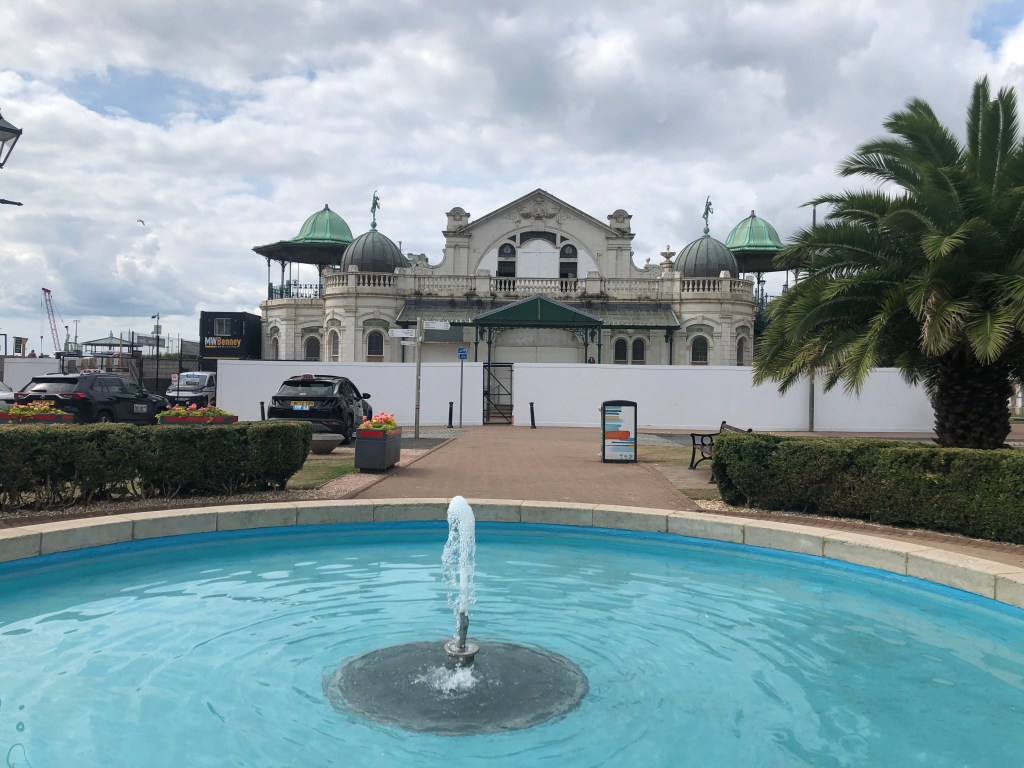
Agatha Miller was born in Ashfield, Torquay in 1890, today just marked by a plaque, the original house having been demolished in the 1960s. Throughout the town are the places she knew as a child: the coves where she swam, the pavilion where she went to concerts, meeting Archie Christie there in 1913, and the Grand Hotel, where they spent their honeymoon the following year.
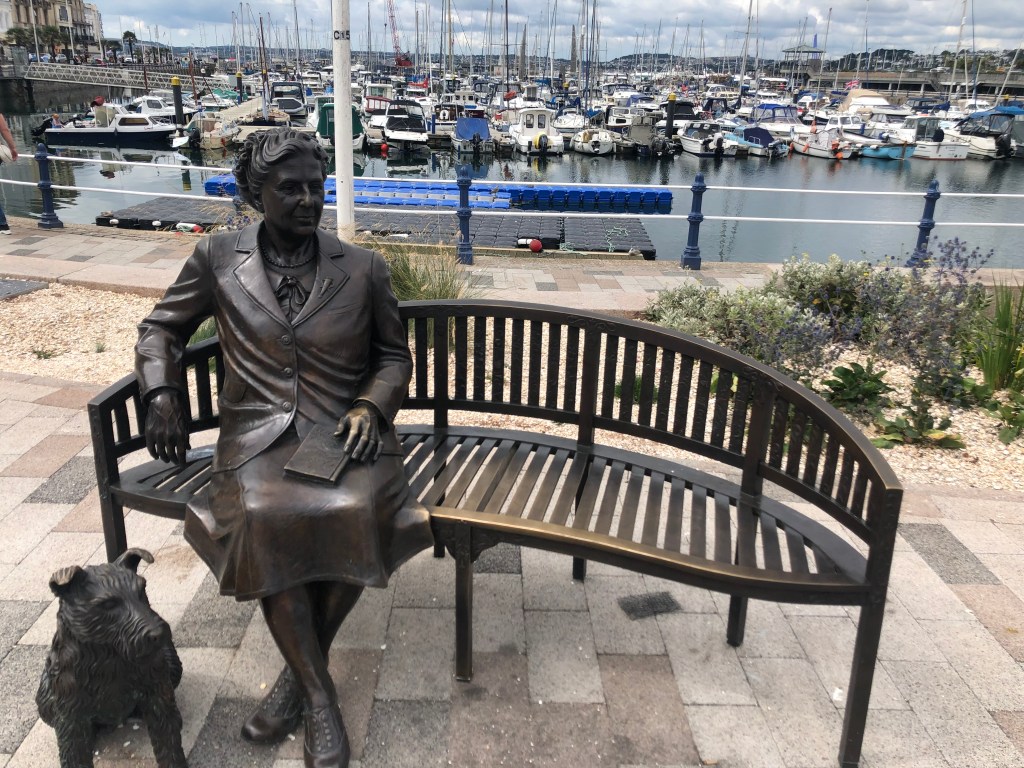
Torquay is centred on a harbour, with little boats docked in ordered rows and buildings on three sides: cafés, restaurants and bars predominate. I headed first to the tourist office, pausing briefly to admire the new bench statue of Christie, by Elisabeth Hadley, erected on the Harbourside inn 2025. In the tourist office, you can pick a leaflet which will guide you around the ‘Agatha Christie Mile’: a short walk around the town taking you to Christie related locations. I walked around it on a pleasant morning in July while Mrs. P availed herself of shopping and seal-watching opportunities.
The walk takes you in a figure of eight loop from the tourist office, around the harbour and up Beacon Hill, past the Yacht club, where Agatha’s father was a member, past Beacon Cove, where young Agatha went swimming (on one occasion, getting into difficulties and being rescued by a fisherman) to the Imperial Hotel. It’s worth stopping here to appreciate the opulence of the surroundings.
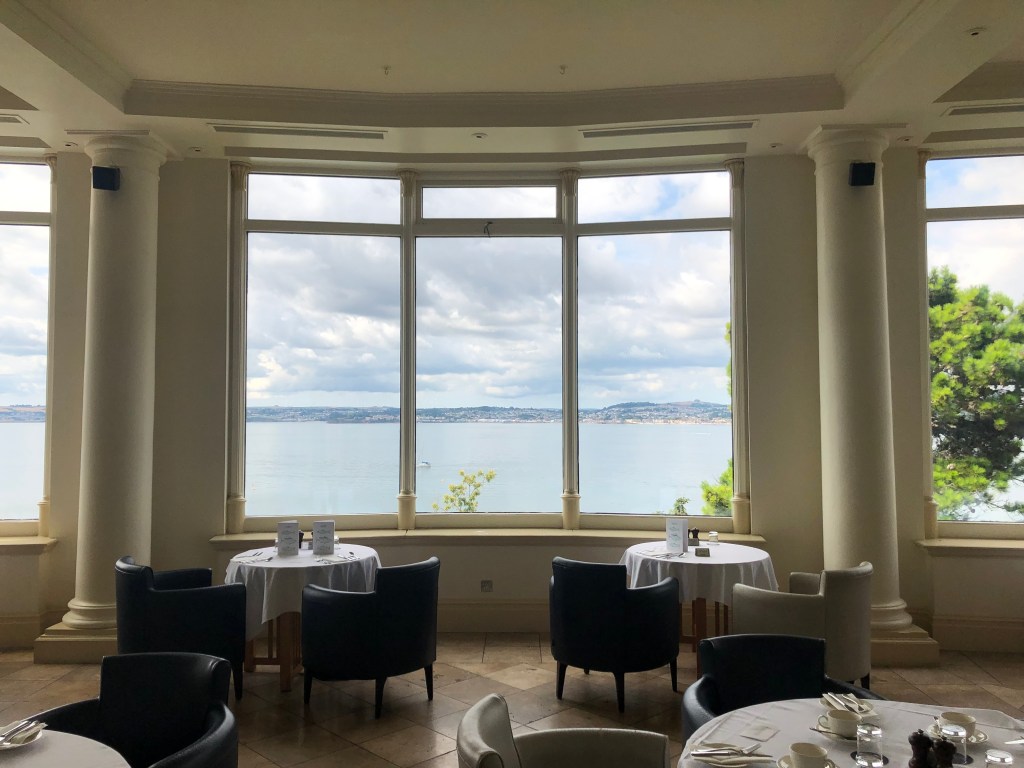
Christie fans will know the Imperial as it appears in Sleeping Murder‘; Miss Marple takes a break from sleuthing here at the end of the novel. Unfortunately, this isn’t the hotel Christie knew, having been built in 1965, but the interiors are grand and include panoramic windows from which you can enjoy spectacular views across Torbay.
I took a seat in one of these panoramic bays, enjoying the magnificent view of the riviera and hoping to enjoy a drink before continuing my journey. There were a few people around, enjoying a morning coffee or pre-lunch drinks. I waited for a few minutes but of waiting staff there was nary a one. So I left and went on my way.
Here the route leaves you to make your way back into town, to be picked up again at the Torquay Museum. I took a short-cut through Parkhill Road, hoping its elevated position would give me some nice views of the town. There is quite a pleasant view of the little square harbour, but the road ducks behind buildings and the view is lost from sight. Eventually, I arrived at a busy road junction and climbed the hill towards the museum.
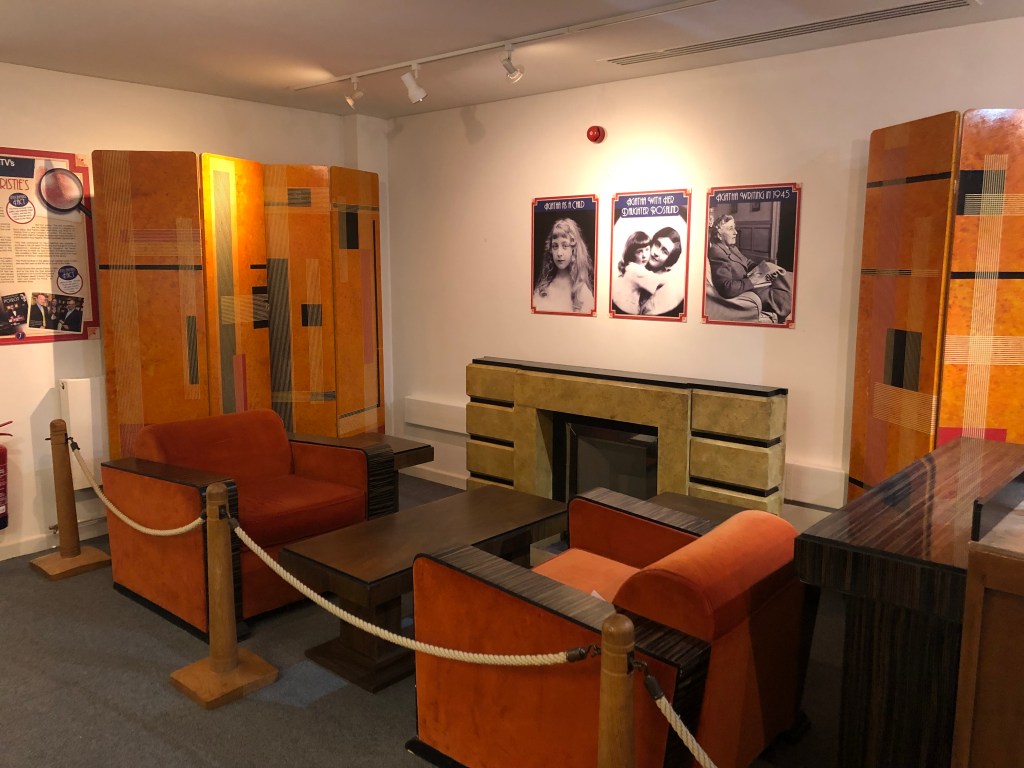
Agatha was a frequent visitor to the museum, attending talks and functions here. The museum has a gallery dedicated to the queen of crime, telling the story of her life in Devon and examining some of her characters. I enjoyed seeing the recreations using period furniture, and having Agatha’s earlier life and work arranged chronologically. The exhibits, however, seemed to focus more on TV and film adaptations of the novels, rather than the books themselves. Poirot’s cane is here, and some of his costumes from the shows, alongside some sported by Joan Hickson as Miss Marple.
I followed the route back into town, where it visits the Princess gardens: a pleasure garden named after Princess Louise. Founded in 1890 and featuring in The ABC Murders, the gardens have a prominent bust of the queen of crime. The route continues west on to visit the pier and the railway station but I left it here and made my way to Torre Abbey. The Abbey dates from 1196 and now houses an art gallery. I would have liked to have spent some time in the gallery but, not really having the time, I made directly for the garden the object of my visit.
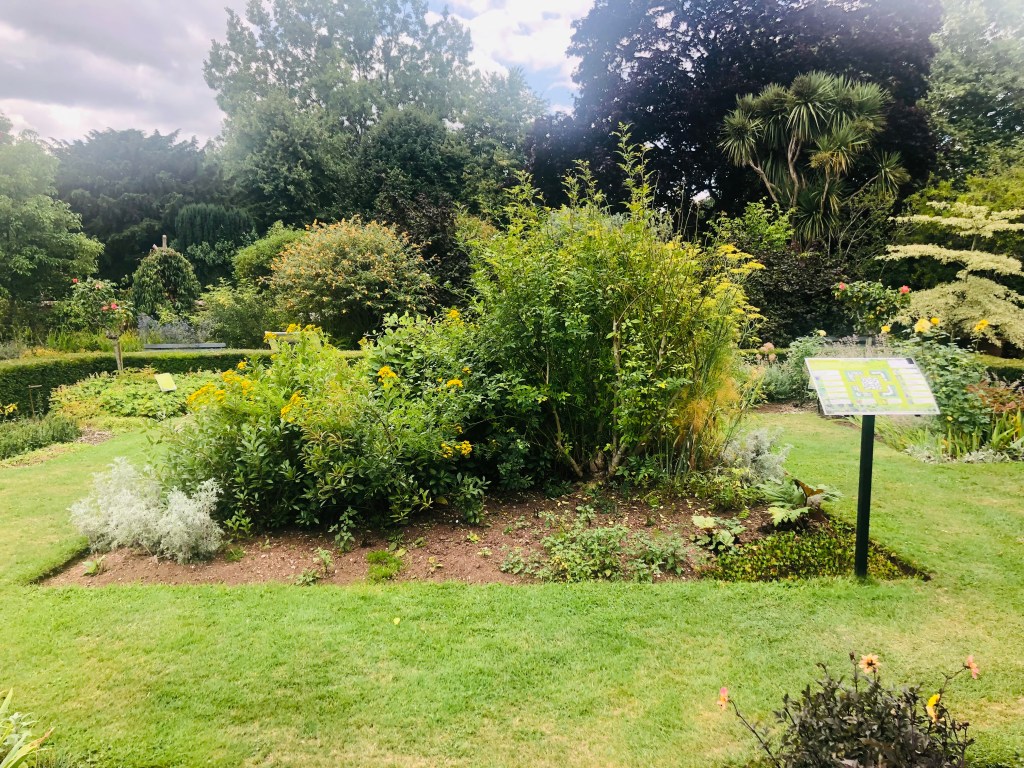
The Agatha Christie Gardens features examples of some of the plants used in her stories. Christie, who had trained as a pharmacist, had a great understanding of poisons and their effects on the body. More than half of her victims meet their end through poisoning. You will find examples of the plants here: some beautiful; some sinister. There are opium poppies, castor beans and Foxgloves and cyanide yielding peach trees.
I wandered back into the town after this, where I met Mrs. P back by the harbour, where she had been doing some seal watching. We dined on Fish and chips from a cardboard carton. and delicious it was too.
The following day we drove further down the coast to the west side of Torbay, where Christie’s home, Greenway, is in the care of the National Trust. Christie spent most of her life traveling, staying at one of her many homes in the UK or touring lands on world tours and archaeological digs (her second husband, Max Mallowan was a world-renowned archaeologist) but she always returned to Greenway for summers and Christmases. It’s a long walk from the car park to the house but it is a pleasant one: the path isn’t too steep and leads to a small courtyard with tea rooms, gift shops and second-hand books. A further short walk brings you to the house itself.

Greenway is a stately, white building with a colonnaded portico. It has been preserved more-or-less as Christie left it. Personal items adorn every room:, giving the place a lived-in, homely feel. The family, as you might expect of archaeologists, were great collectors and every room of the house some sort of collection. There are displays of fine china and dolls as well as ancient artefacts. There are display tables full of stamps, miniatures, watches, snuff boxes and all sorts of ephemera. In some rooms, dominoes, cards and board games litter the floor, as if the child had left the room briefly and would return to her game. Christie’s DBE Medal sits with a bunch of other tuff in a c rowelled cupboard, a notice informs us that this is where it was found after Christie’s death.
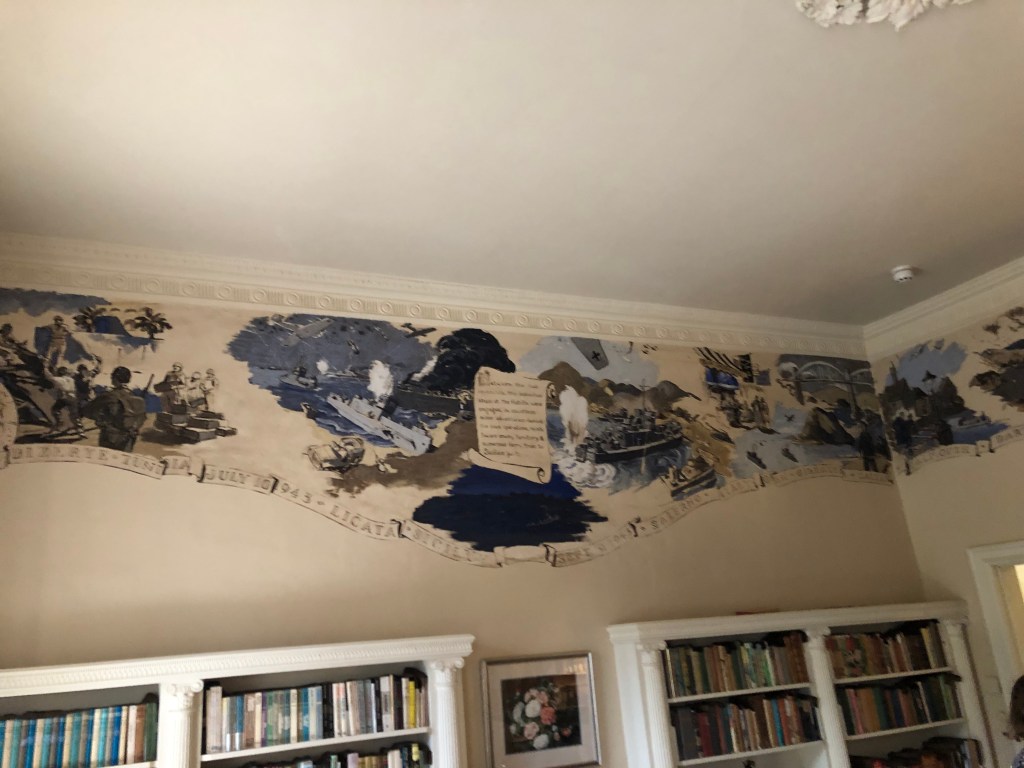
The room I was looking forward to most was the library, complete with its military mural. The building was requisitioned by the US army during the Second World War and they painted a regimental mural on the library wall. On leaving the house, they offered to paint over it, restoring the room to its original decoration but Christie insisted it stayed.
The house makes a fine location. for an afternoon out. There are extensive grounds and we rounded off our visit with a short walk through the woodland. For the fan of Christie, there is a treasure trove of memorabilia, from the queen of crime herself and from the various adaptations of her work that have been reinvented for successive generations of fans.
If you want to find out more about Agatha Christie and her life, I highly recommend Lucy Worsley’s biography. Lucy writes with beauty and clarity and her books are always a pleasure to read. history
 Literary Britain
Leave a comment