“I am settling in Amiens, a wise and polite town, of equal temperament. The society there is cordial and literate. It is close to Paris … without the unbearable noise and sterile agitation.” – letter from Jules Verne to Charles Wallut, 1871
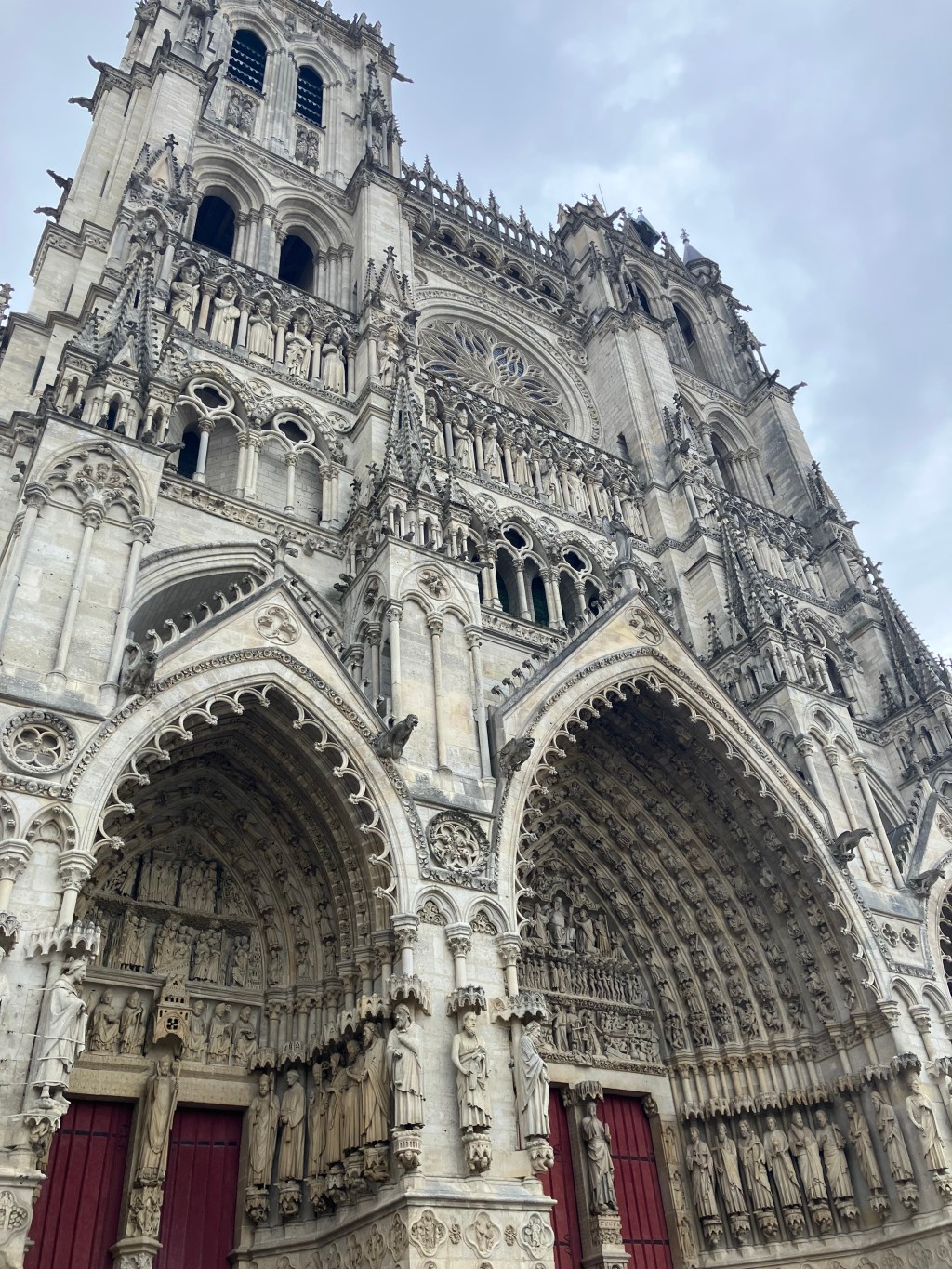
Amiens is a beautiful city. The high-Gothic cathedral dominates the town, and little cobbled streets wind around canals and streams; tributaries of the Somme, which run through the heart of the city. You will find little squares lined with cafés and restaurants hiding in quiet corners. Away from the main roads, Amiens is quite peaceful and uncrowded. There is quite a large student population (studying à l’Université de Picardie Jules Verne), but in general, the streets, save for a few locals, are quiet and clean. There are no Tesco’s, no Starbucks, no Pizza Hut, just local, friendly, and relaxed shops, cafés, and restaurants.
Cafés and Restaurants by the Somme
I was here for a short break with a couple of friends to visit the battlefields to the east, where a major part of the First World War was fought. During our short time in the city, we were able to explore and find a few nice restaurants and bars. They were all excellent: traditional French food, fresh fish, well-cooked meat and good wine. I tried Ficelle Picarde, the local specialty: a ham and mushroom crepe in a cream sauce, which was delicious but immensely rich. There was crème brûlée aplenty, a particular favourite of mine, and I inhaled several of them during my stay.
The people we met were lovely. More-or-less universally helpful, kind and welcoming. Only one man laughed at my attempts to speak French. The bars in particular were very relaxed, even by British standards. We liked the 9¾, a Harry Potter and gothic themed bar, opposite the university; Le Charleston, a hip young joint with live music and draft Guinness; and Câté Bar, a friendly little bar near the Somme, showing a TV dance contest, which was absolutely mesmerizing.
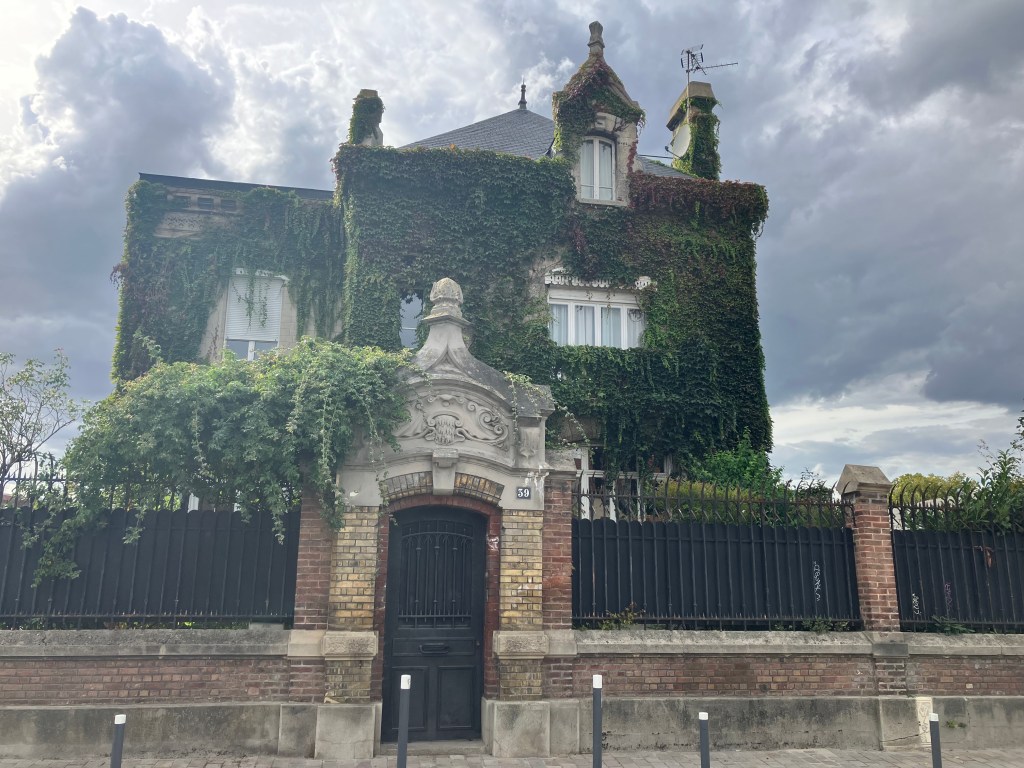
The inspiration for the Aziers’ house, Boulevard du Cange, Amiens
Amiens features in Birdsong by Sebastian Faulks. During a visit to the Hortillonnages Gardens, Stephen Wraysford has a premonition of the death and destruction he will witness in the First World War while navigating the gardens:
The brown waters were murky and shot through with the scurrying of rats from the banks where the earth had been dug out of trenches and held back by elaborate wooden boarding.
Sebastian Faulks, Birdsong
You can visit the Hortillonnages gardens today. They are navigated by a boat, which weaves through the gardens in a series of channels. You can also see the house on which the Azières’ home is based: a grand, imposing, ivy-covered villa in the northern part of the city.
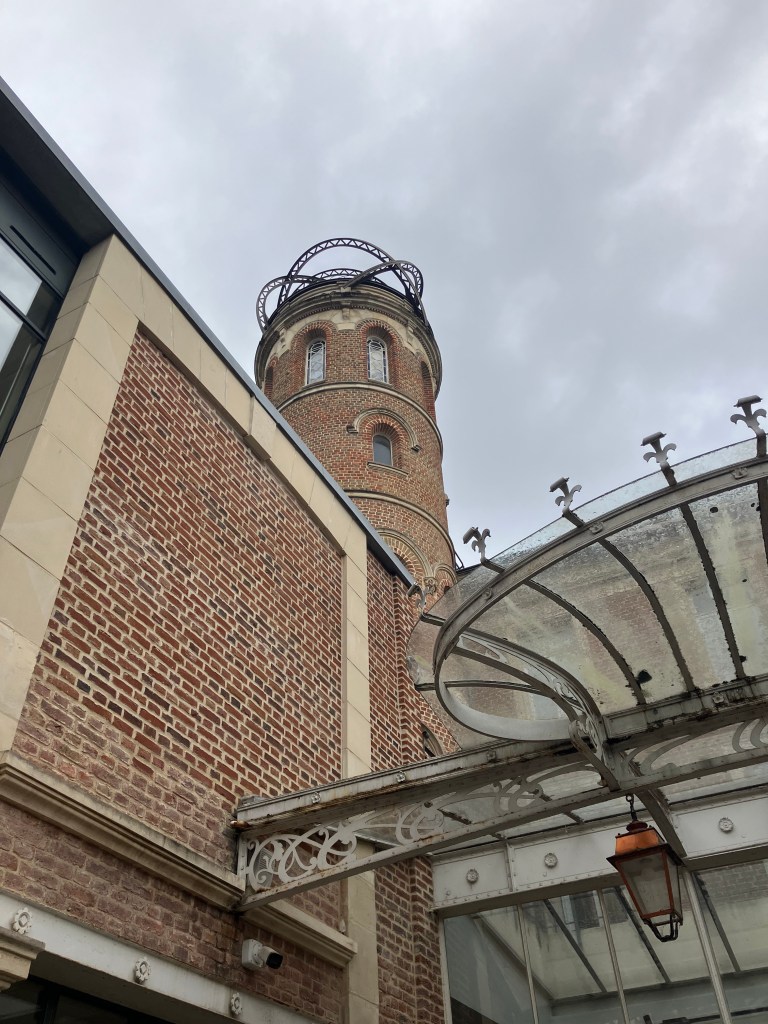
Jules Verne, born in Nantes and resident in Paris, visited Amiens for a wedding when he met the bride’s sister, 26-year-old widow and mother of two, Honorine de Viane. Their eyes locked across a crowded room, or something, and they were married the following year. After the birth of their son, Michel, Honorine wished to be closer to her family. They settled at 44 Boulevard Longueville in 1873, moving along the road (now Boulevard Jules Verne) to the large house with a tower, the site of the museum, in 1882.
Maison de Jules Verne, Amiens
This mansion now houses the Jules Verne museum. It has been beautifully preserved, striking the very difficult balance between historical home and museum: with some rooms preserved as the Verne family would have known them and others reimagined as exhibits of his life and work. There are recreations of the bridge of his yacht and his publisher’s office in Paris. His library shows a fascination with science and exploration as well as the literature of the age. There are display cases of his books, letters, and artifacts throughout. In quiet corners and little-used rooms, there are movie posters, models of machines, and books. Everywhere, there are books.
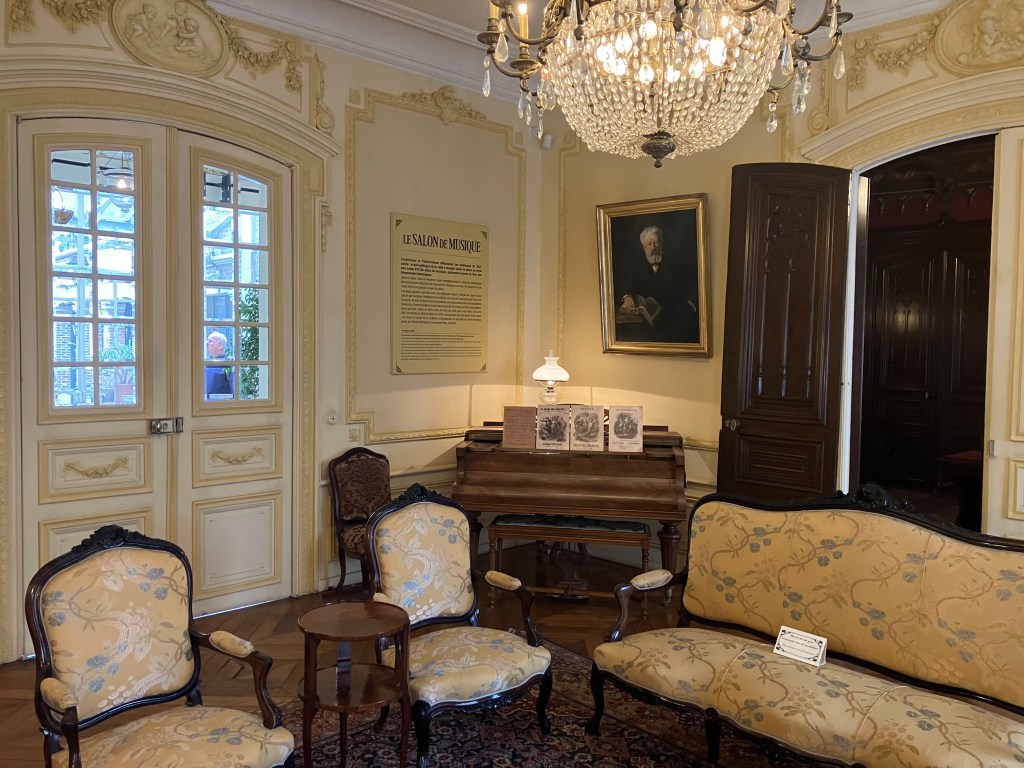
The ground floor rooms evoke the Verne family’s bourgeois lifestyle They are elegantly furnished, sumptuously decorated and rich with photographs and portraits of the author and his family. By the time he moved in, Verne was already a celebrated novelist, having written his three most enduring works: Journey to the Centre of the Earth, Around the World in Eighty Days, and 20,000 Leagues Under the Sea.
The Music Room, Maison de Jules Verne, Amiens
Elsewhere in Amiens, Jules Verne is remembered through street names and statues. There is a bust outside the city hall, where he worked as a councillor, a monument in the town square, on the banks of the Somme, and a further, large-scale memorial near to the house. It depicts Verne in three stages of life: as a child, being read to by his mother; as a youth, absorbed amid the pages of a book; and finally as an adult. The university has been named in his honour, and there are a number of information boards explaining Verne’s connection with buildings throughout the town: his homes, the town hall, and the Musée de Picardie. A wonderful art collection that introduced me to some French art I hadn’t encountered before.
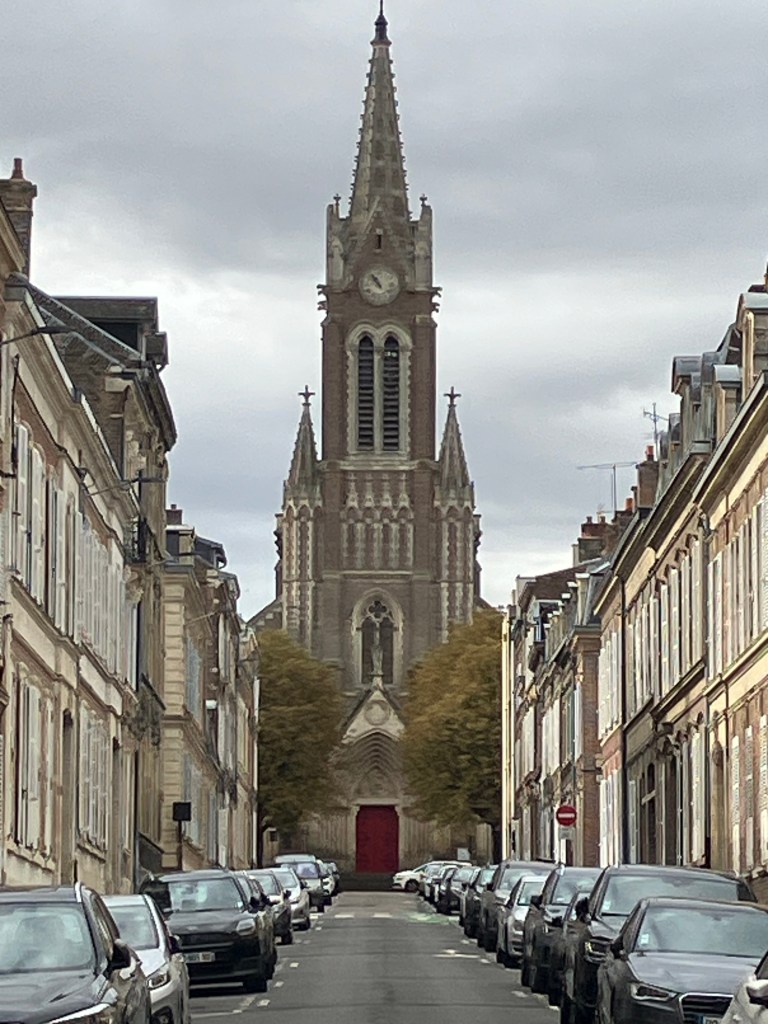
Église Saint-Martin d’Amiens, Jules Verne’s parish church
Verne had to move back into 44 Boulevard Longueville towards the end of his life, when age and infirmity made the mansion difficult to manage. He had contracted diabetes and suffered a stroke which paralyzed him on one side. He died on 24th March 1905. His funeral took place in his parish church, St. Michel de Amiens, and was a huge public event, attended by representatives of literary, scientific, and geographical societies, local dignitaries, and schoolchildren.
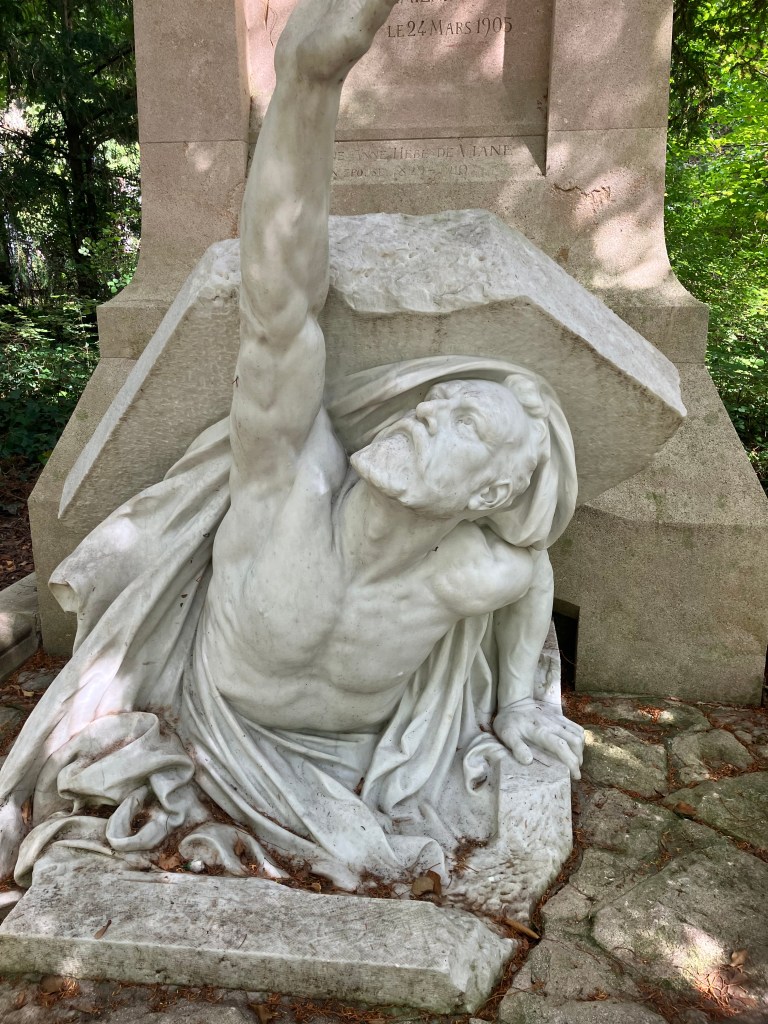
He is buried in Cimetière de la Madeleine on the outskirts of town. An atmospheric necropolis. Heavily wooded with ivy covered tombs and gothic family vaults. Verne’s tomb, supposed to depict his soul reaching towards heaven, appears to show the author breaking free of his tomb, an appropriate memorial for an author, some of whose legacy has endured for so many years. His books are still read, performed and reimagined and he remains popular and influential to this day.
For more information about this and other literary locations, please try the Literary Britain Maps

 Literary Britain
Leave a comment