
Literary Britain goes in search of James Joyce’s Dublin
The city of Dublin is one of the foremost literary destinations in the world. Many authors have been born, lived, and had their talents nurtured in this epitome of author-friendly towns. One writer is celebrated in Dublin more than any other and you’ll find effigies of James Joyce throughout the city.
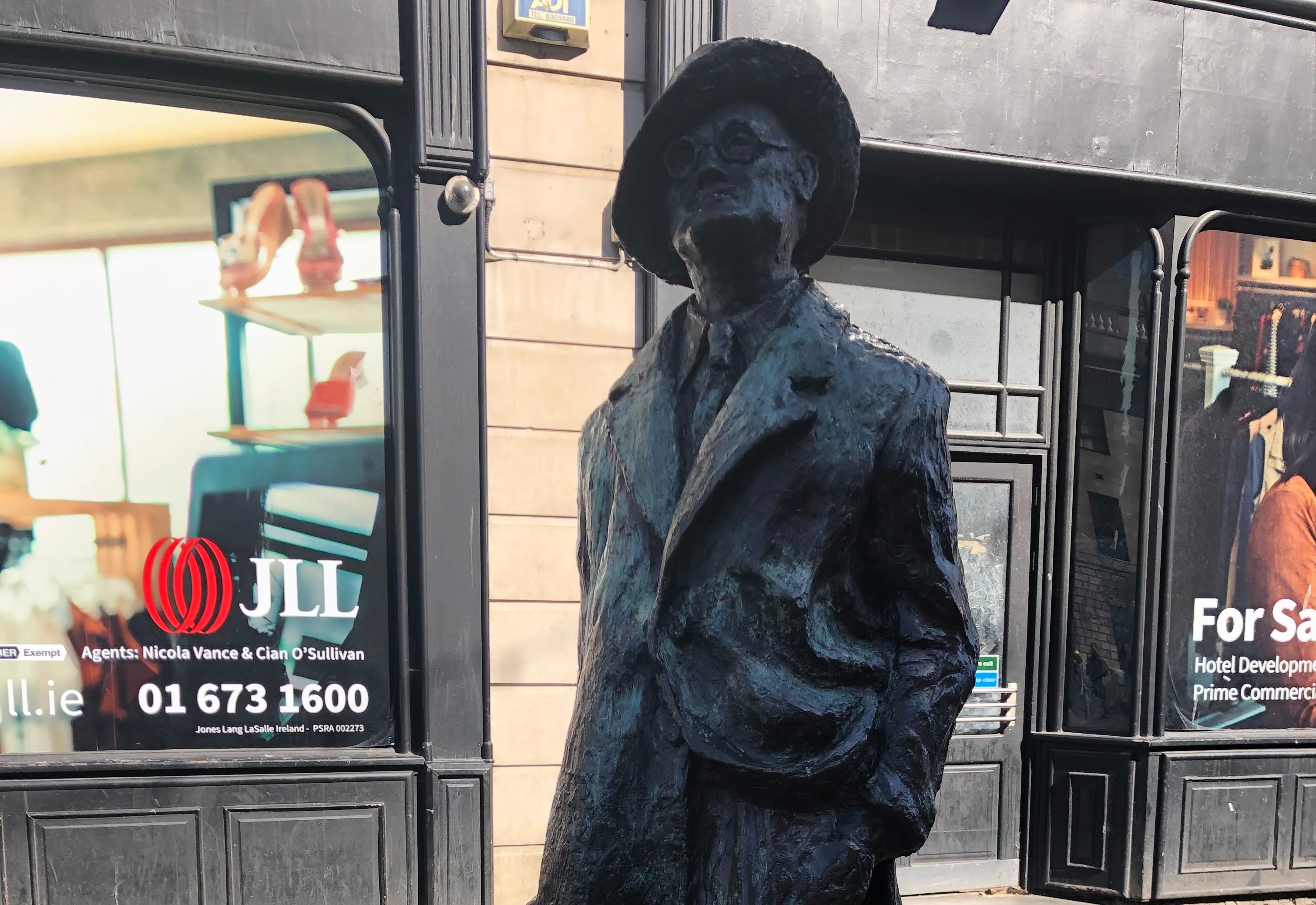
Joyce belongs to Dublin in the same way that Dickens belongs to London: his ghost seems to wander everywhere. You can see him in statues, paintings, and sculptures across the city. His characters stalk the streets and you’ll find depictions of Bloom, Molly, and Stephen on murals throughout Dublin. There’s even a celebration day dedicated to his most famous novel, Ulysses. Several locations across the city help visitors understand and appreciate the book:
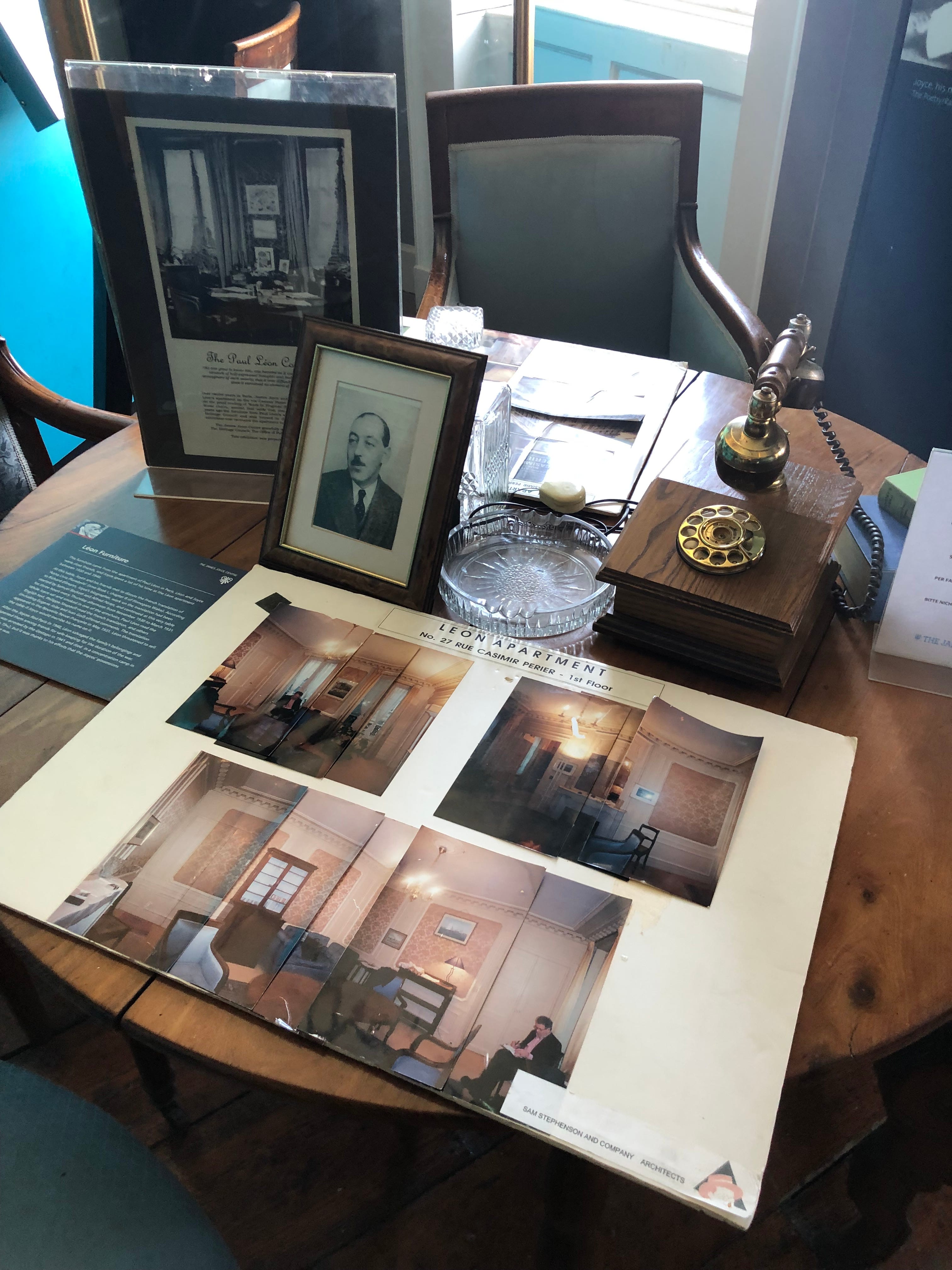
James Joyce Centre
A museum dedicated to telling the story of Joyce, his family, and his deep connection to the city. The exhibits explore his life and works, with a particular focus on Ulysses. I especially enjoyed the exhibition where each chapter of the novel is represented by an object, as well as the recreation of Joyce’s apartment in Trieste, which includes some of his original furniture. The courtyard features murals of scenes from the novel, painted by his grand-nephew, Paul Joyce.
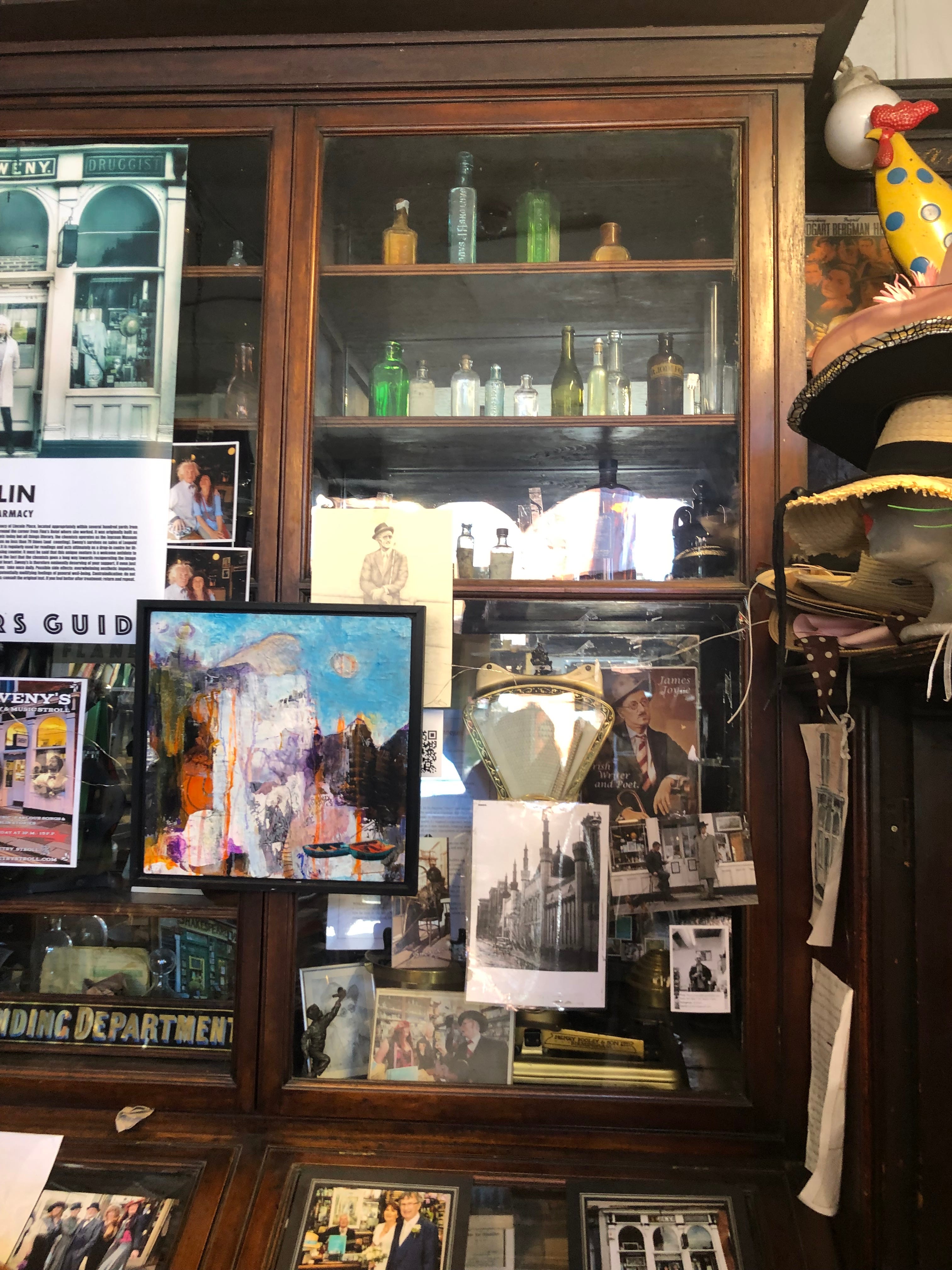
Sweny’s Pharmacy.
Now a bookshop that champions new Irish writing, Sweny’s is preserved as it would have looked in the early 20th century. The charismatic and knowledgeable proprietor is happy to explain the store’s appearance in Ulysses. During his journey through Dublin, Leopold Bloom stops at Sweny’s to fill a prescription for his wife. While there, he buys a bar of lemon-scented soap that he carries for the rest of the day. You can even buy similar soap bars, made from a rediscovered period recipe.
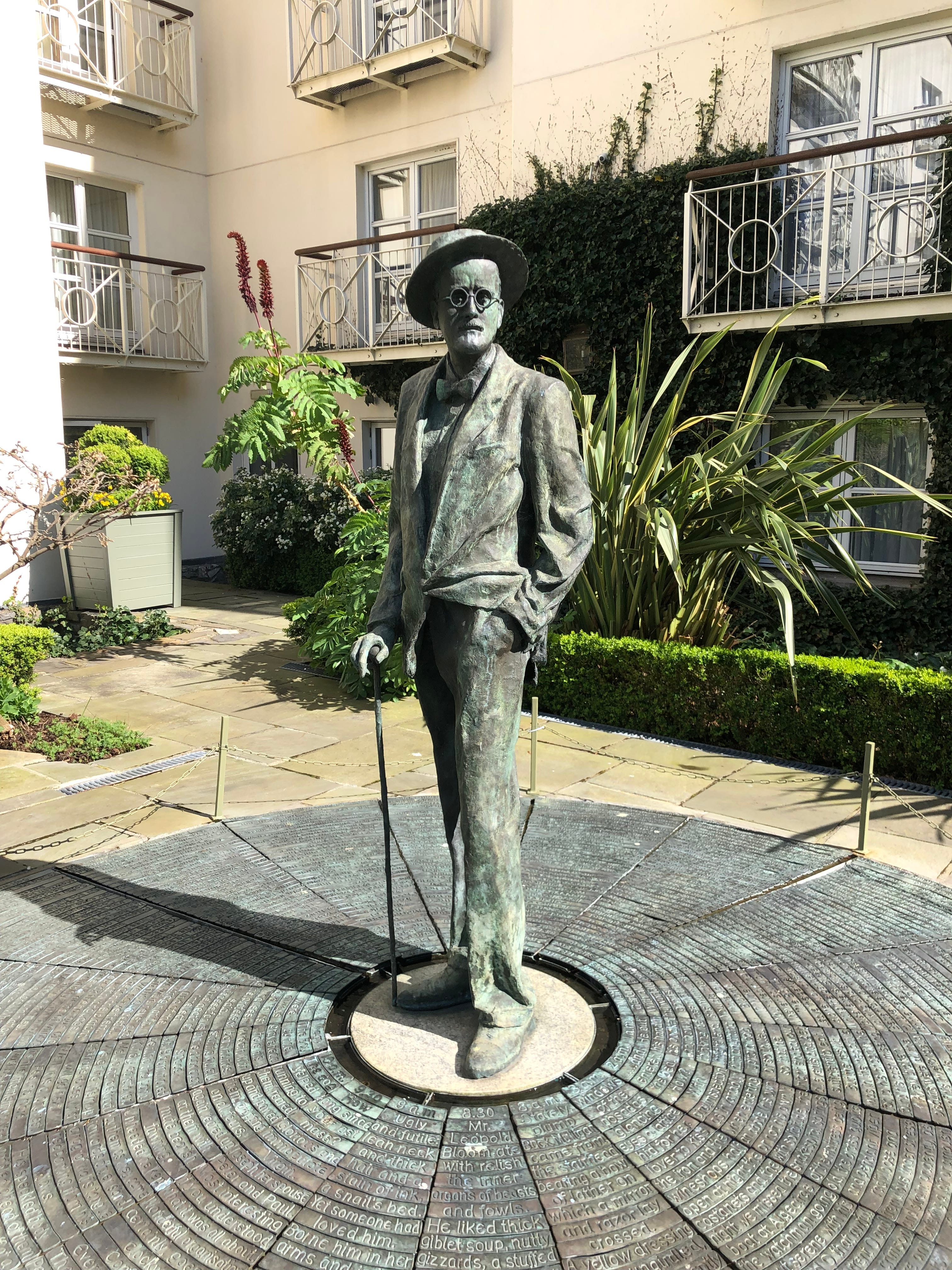
Merrion Hotel.
In the courtyard is a statue of Joyce placed in the centre of a sundial. Inscriptions tell the story of what happens in the book throughout the day on which the novel is set, so the shadow will fall on Bloom’s progress through the city. This is (officially at least) only accessible for hotel guests but no-one stopped me as I wandered through the courtyard and found the sundial with ease. I’m sure the hotel staff wouldn’t mind you going in and having a look if you ask nicely.
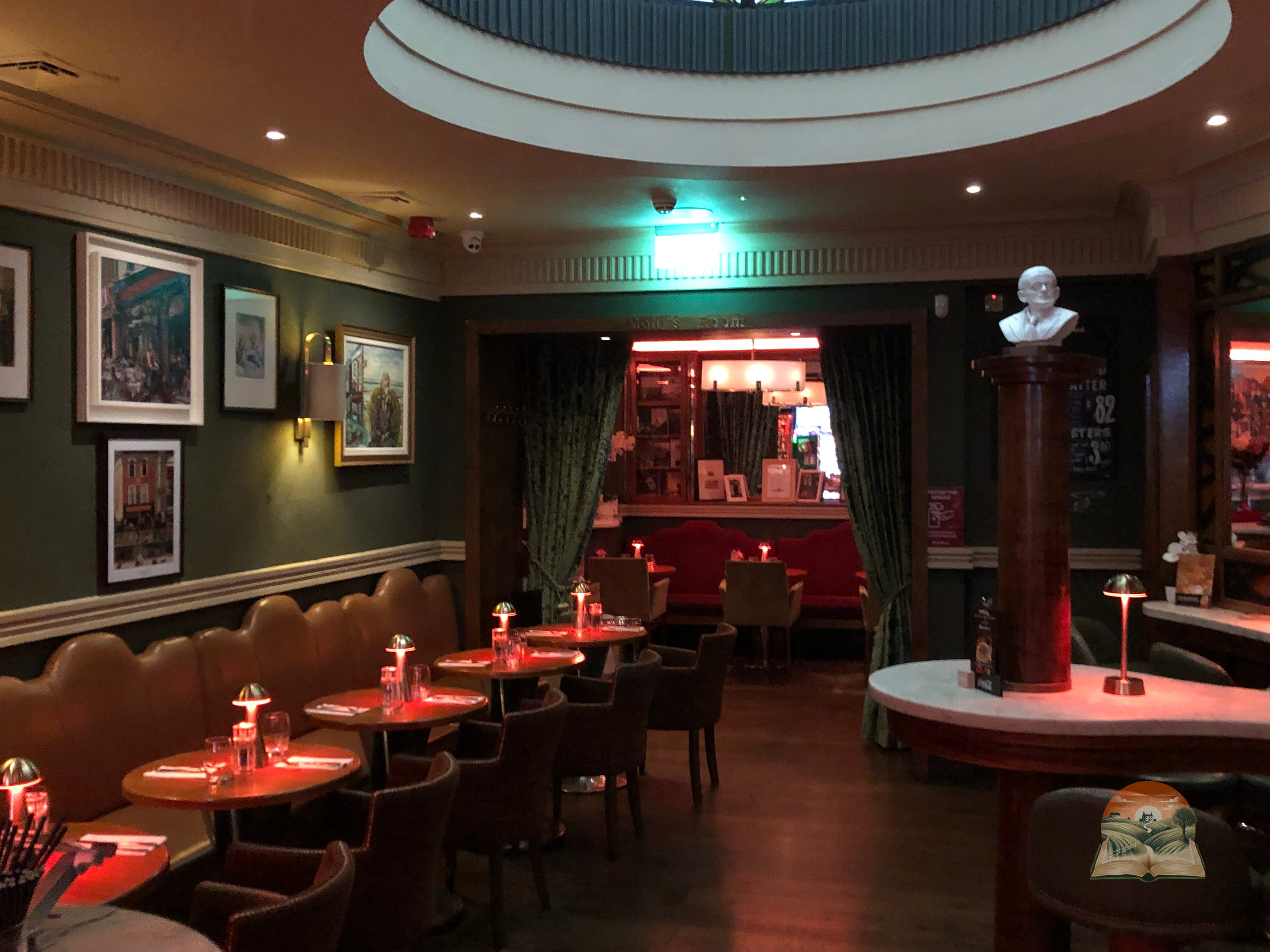
Davy Byrne’s
Located just off Grafton Street, Davy Byrne’s is another Ulysses landmark. Bloom stops here for lunch, ordering a Gorgonzola sandwich and a glass of wine, both of which are still available today, and are especially popular on Bloomsday. The pub is decorated with tributes to Bloom, Molly, and Joyce himself, whose likeness appears in stone, bronze, and paint. I skipped the Gorgonzola sandwich and instead had a Guinness with oysters, which was a wonderful combination.
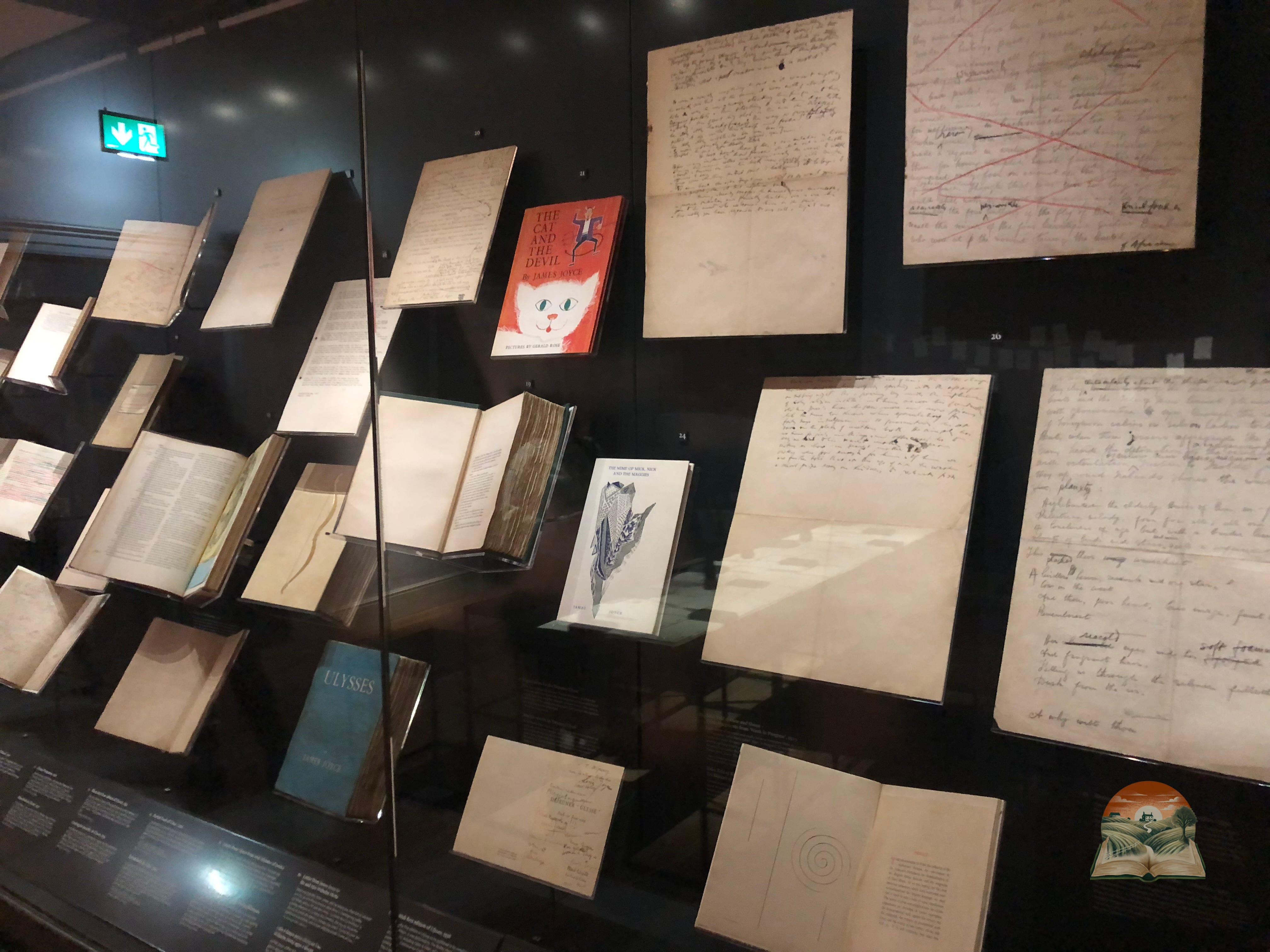
MOLI (Museum of Literature, Ireland)
This imaginative museum doesn’t focus solely on Joyce but brings often-overlooked writers, particularly women, into focus, celebrating their contributions to Irish and world literature. Visitors can explore interactive exhibits, readings, writing activities, and even literary-themed video games. MoLI is housed in Newman House, part of a Catholic university founded by Cardinal John Henry Newman in 1854. Joyce graduated from here in 1902, and Gerard Manley Hopkins once taught Classics here. A standout exhibit features a first edition of Ulysses, focusing on decoding Joyce’s complex use of language.
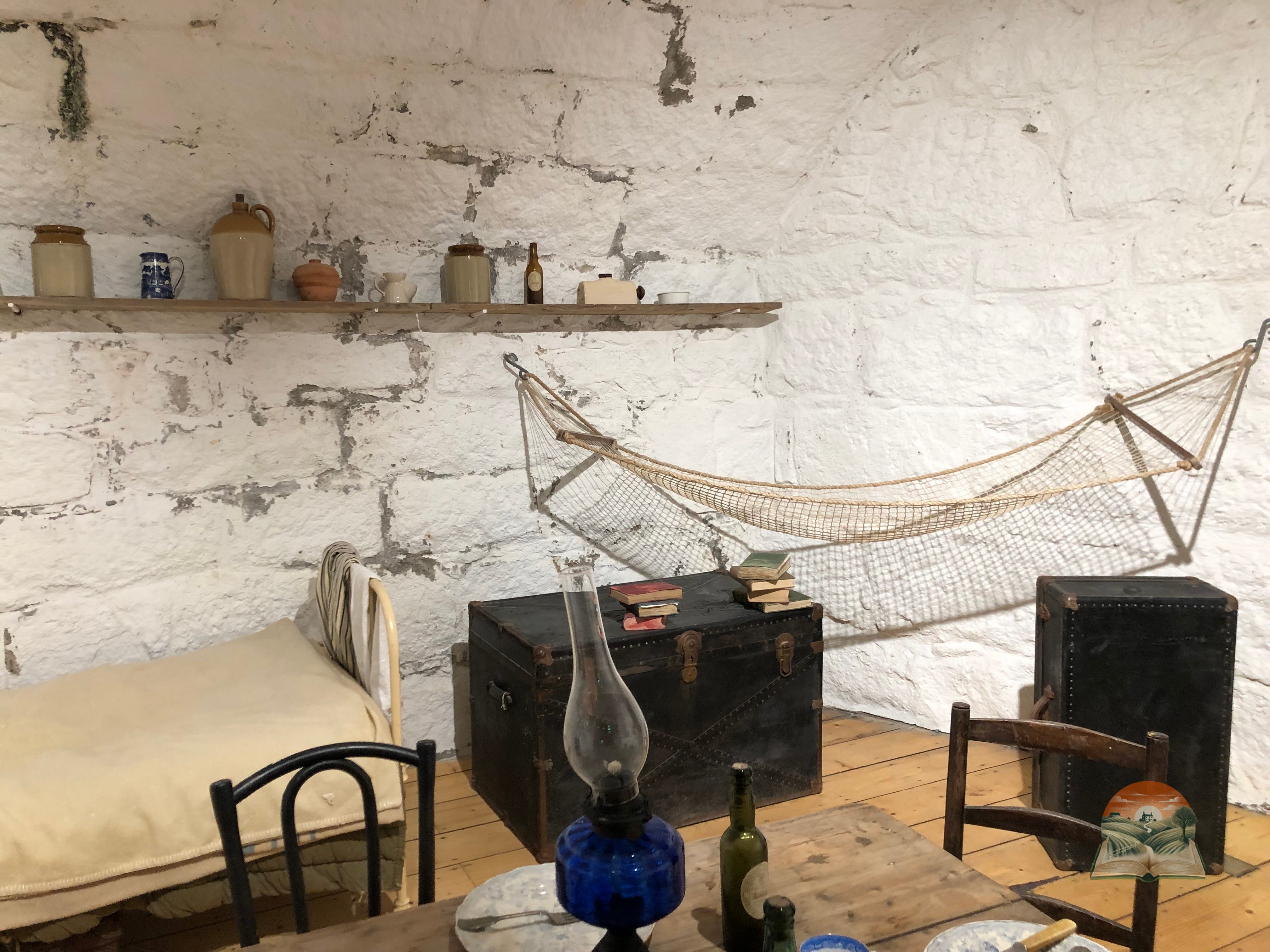
James Joyce Tower Museum
Located in Sandycove and featured in the novel’s opening scene. The museum includes a ground-floor exhibition with anecdotes and witty excerpts, such as the tale of the racehorse Throwaway. The gun deck offers fine views over the bay, and the first-floor bedroom has been recreated exactly as described in the novel, complete with a hammock, period-authentic Guinness bottles, and a set table. A second exhibition room showcases Joyce’s letters, books, and artwork inspired by Ulysses.
Ulysses takes place over a single day: June 16, 1904, the day Joyce first went walking with Nora Barnacle, his future wife. It’s a famously difficult book: each chapter uses a different literary style, from musical rhythms to stream-of-consciousness, shifting perspectives, and dense literary allusions. The novel is as frustrating as it is rewarding.
Ulysses is both the best and worst book I’ve ever read. It’s brilliantly clever. The way it weaves together stories, songs, mythologies, and history in a dazzling display of linguistic innovation is remarkable. At the same time, it’s incredibly challenging: Joyce was pushing language beyond literal meaning. The novel is packed with classical references (especially The Odyssey), allusions to Shakespeare (Hamlet looms large), Irish music, journalism, and contemporary events.
To truly understand the book, it helps to know The Odyssey and to be familiar with Irish literature of the time, which Joyce parodies throughout. Fortunately, there are “read-along” guides that help demystify the text. I used a podcast from Shakespeare & Co., the Paris bookshop that first published Ulysses in 1922, which combines a full reading of the novel with insightful commentary on each episode’s style and themes.
Dublin is a city that doesn’t just remember Joyce: it lives and breathes him. If you’re willing to do a bit of digging (and a lot of walking), you’ll find him on every corner.
© 2025 Literary Britain
Privacy ∙ Terms ∙ Collection notice
Substack is the home for great culture
 Literary Britain
Leave a comment