Literary Britain takes a trip to the seaside
Sandycove is a gorgeous little seaside town in the suburbs of Dublin. During my trip to Dublin this spring, I decided to take a train down the coast to discover the little town that James Joyce once called home.
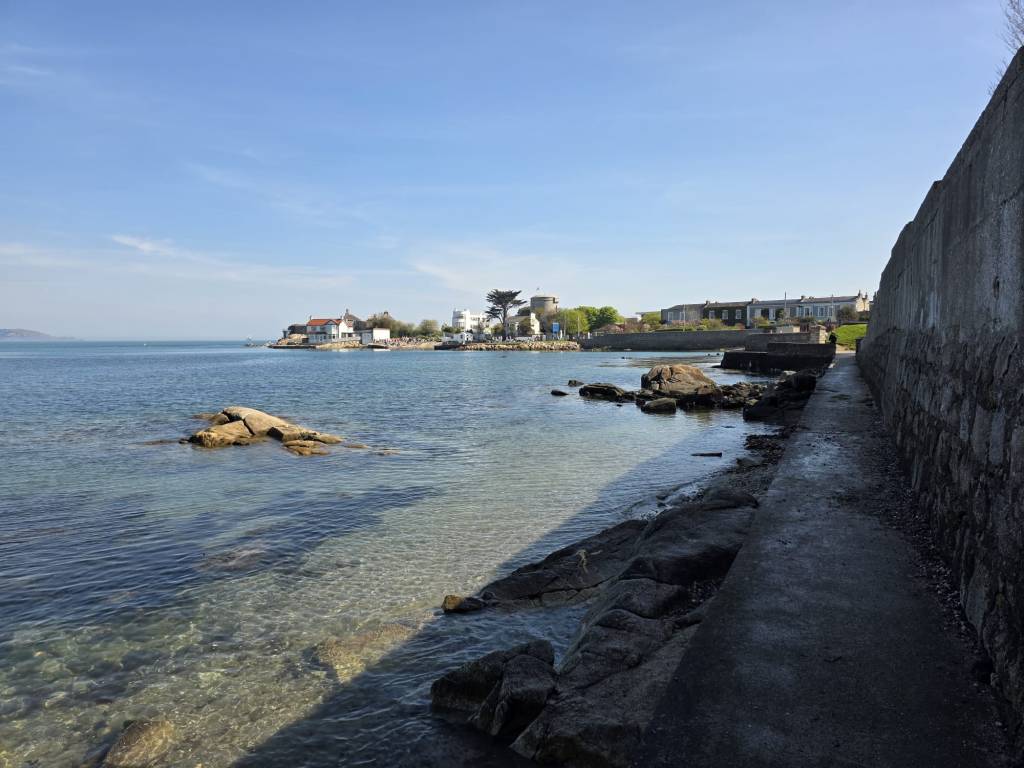
Leaving the train station, you could be in any British or Irish suburb. Pleasant semi-detatched houses cluster round leafy greens. Soon, the trees give way to the pleasant little shopping street of Glasthule: a lovely little town with a good selection of shops. There are boutiques, a pub, an artisan deli, alongside an off licence and a coffee shop. A short walk brings you to a promenade along a rocky beach. We were met with a warm and pleasant day, with clear views across Dublin bay to Howth Head in the distance, and ships coming into and out of Dublin Docks. The sea looked inviting but this was early April. Surely, no one would brave the icy waters of the Irish sea today. Would they?
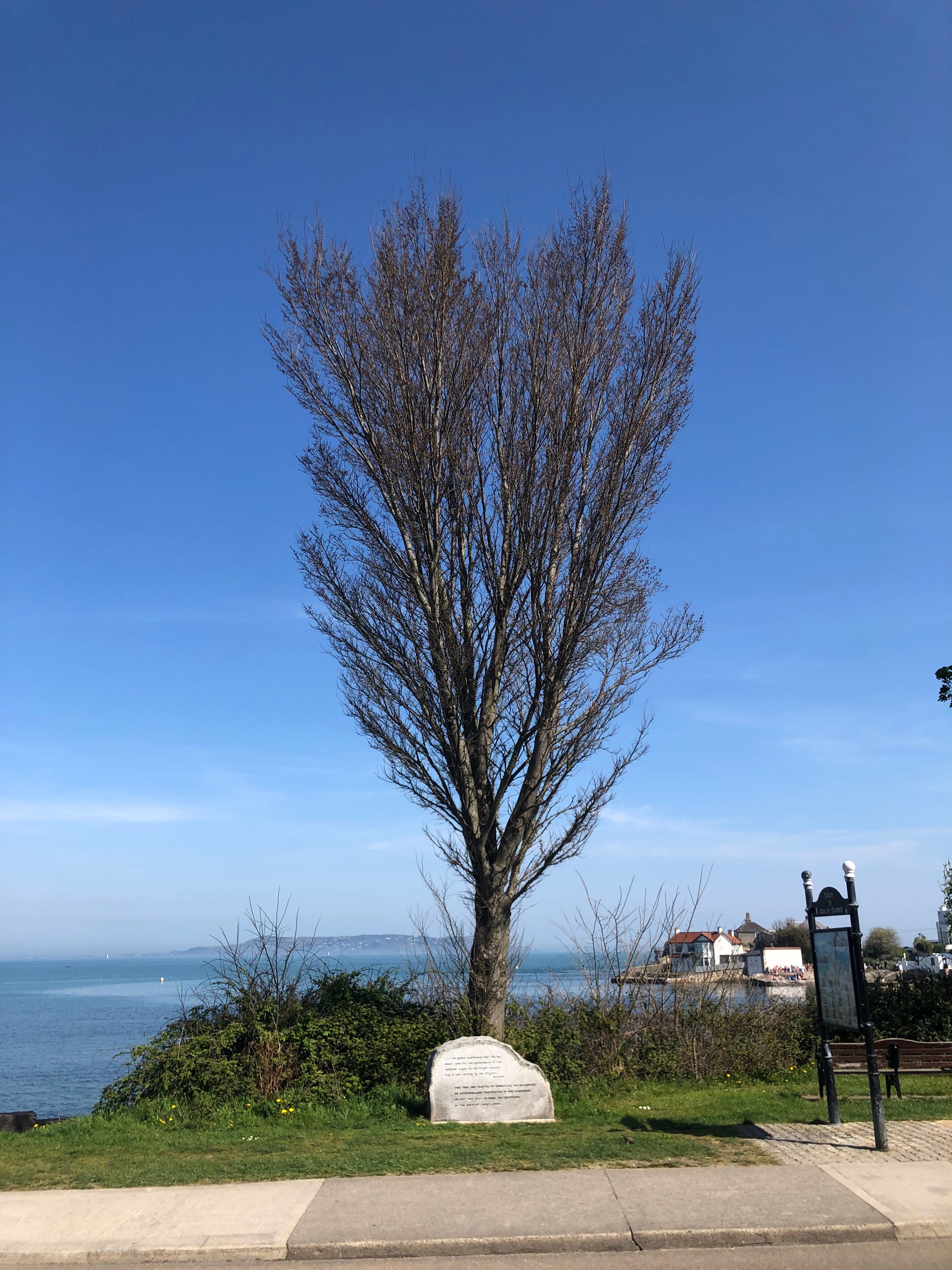
There is a pleasant little park at Sandycove, with lawns and trees, one of which was plated to commemorate the 100th anniversary of Joyce’s birth.Information boards offer insights into the area’s history, architecture, and some of its more famous residents, one of whom I had been tracking all week. Walk through the park and you will arrive at a lovely little beach, nestled between the rocks like a… well, like a sandy cove. Happy Dubliners were swimming, sunbathing and playing in the sand. It was crowded with people happily enjoying the unseasonably warm weather.
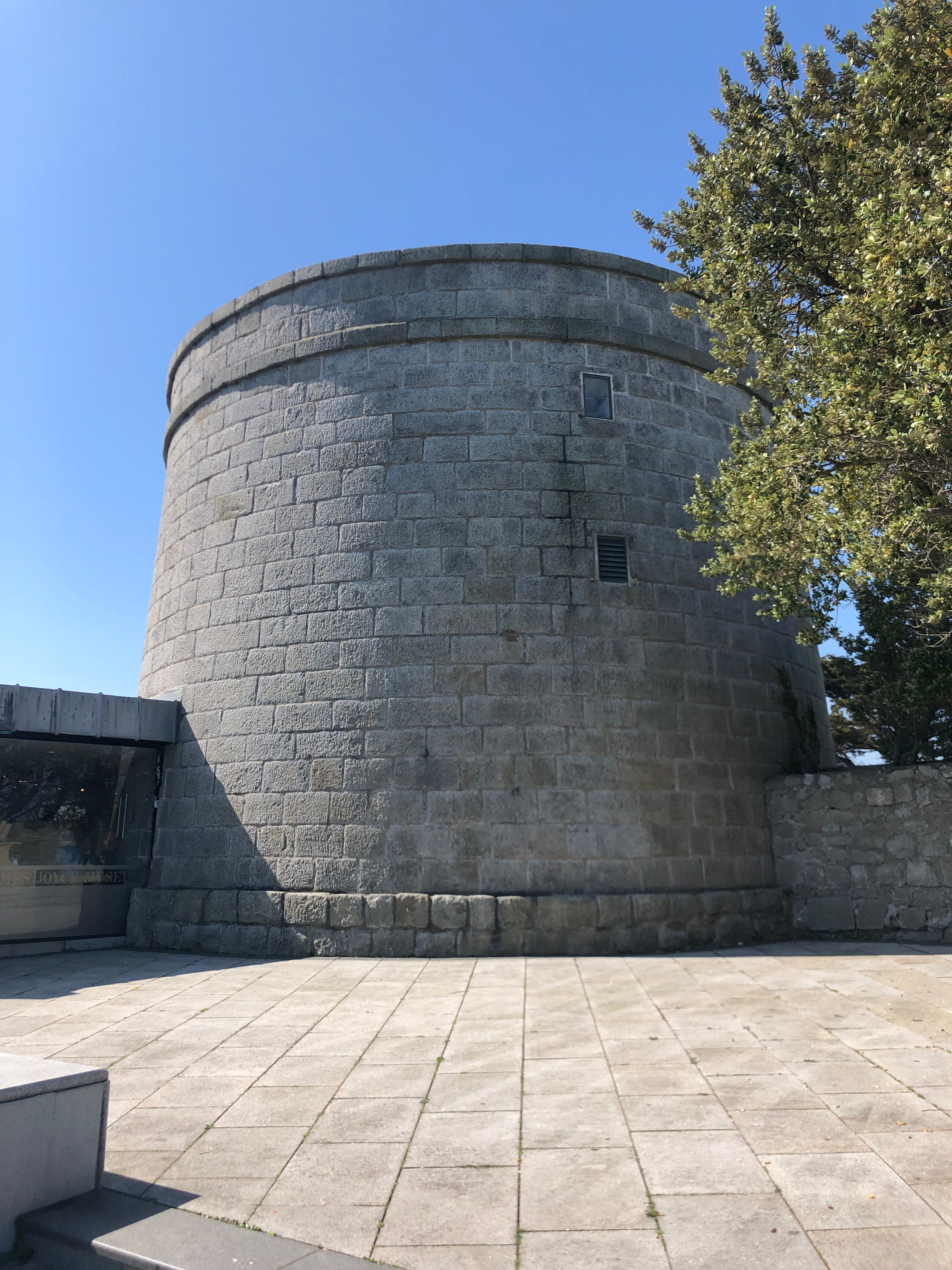
Around the corner was the object of our journey. The round fort at Sandycove was once rented by Gogarty, who lived here with James Joyce in 1904. Oliver St. John Gogarty was a medical student and an aspiring poet. He had rented the Martello tower and invited Joyce to stay with him along with Samuel Chevenix Trench, an English friend of Gogarty. The three of them slept in the first floor of the tower, which has been preserved largely as they would have known it. It seems that Gogarty and Trench were less than ideal room-mates: Trench woke from a dream one night and grabbed his revolver, to start shooting at a black panther which he believed had materialised in the room. Joyce was terrified and left the tower immediately. Their time there is commemorated in the first chapters of of Ulysses, where Joyce and Gogarty are immortalised as Stephen Dedalus and Buck Mulligan.
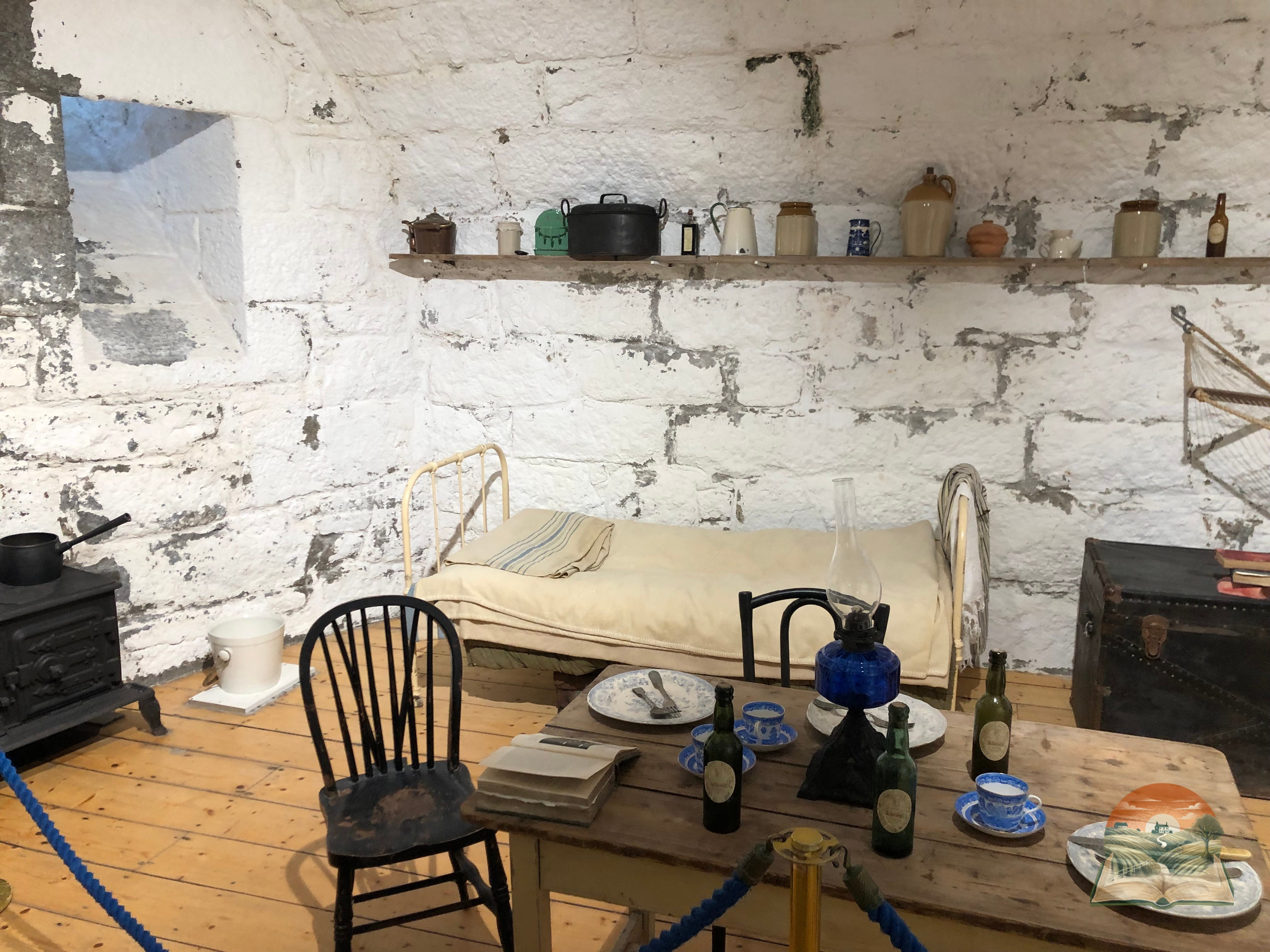
You can visit the tower, which now houses a museum of James Joyce. The tower itself is preserved just as Joyce describes it, complete with hammock and furniture and even period-specific Guinness bottles.
Three delightful ladies welcomed us warmly, their faces lighting up when I shared my love of Ulysses. They showed us around the ground floor exhibition room, sharing anecdotes and amusing passages from the book, such as that concerning the raceshorse, Throwaway, whose picture hangs from the ancient stone wall. We were advised to start at the top and come work down the tower, so that’s what we did, bursting onto the top deck like Buck Mulligan preparing for his morning ablution. The views across the bay are magnificent and we spent a short while standing on the parapet and looking out to sea.
On the ground floor, another exhibition room featured artwork inspired by Ulysses, along with Joyce’s books and letters. There was also a small bookshop, but I had already spent far too much on books and was in danger of exceeding my baggage allowance for the flight home. We bid farewell to the trio of ladies in the gift shop and walked around the corner to the Forty Foot.
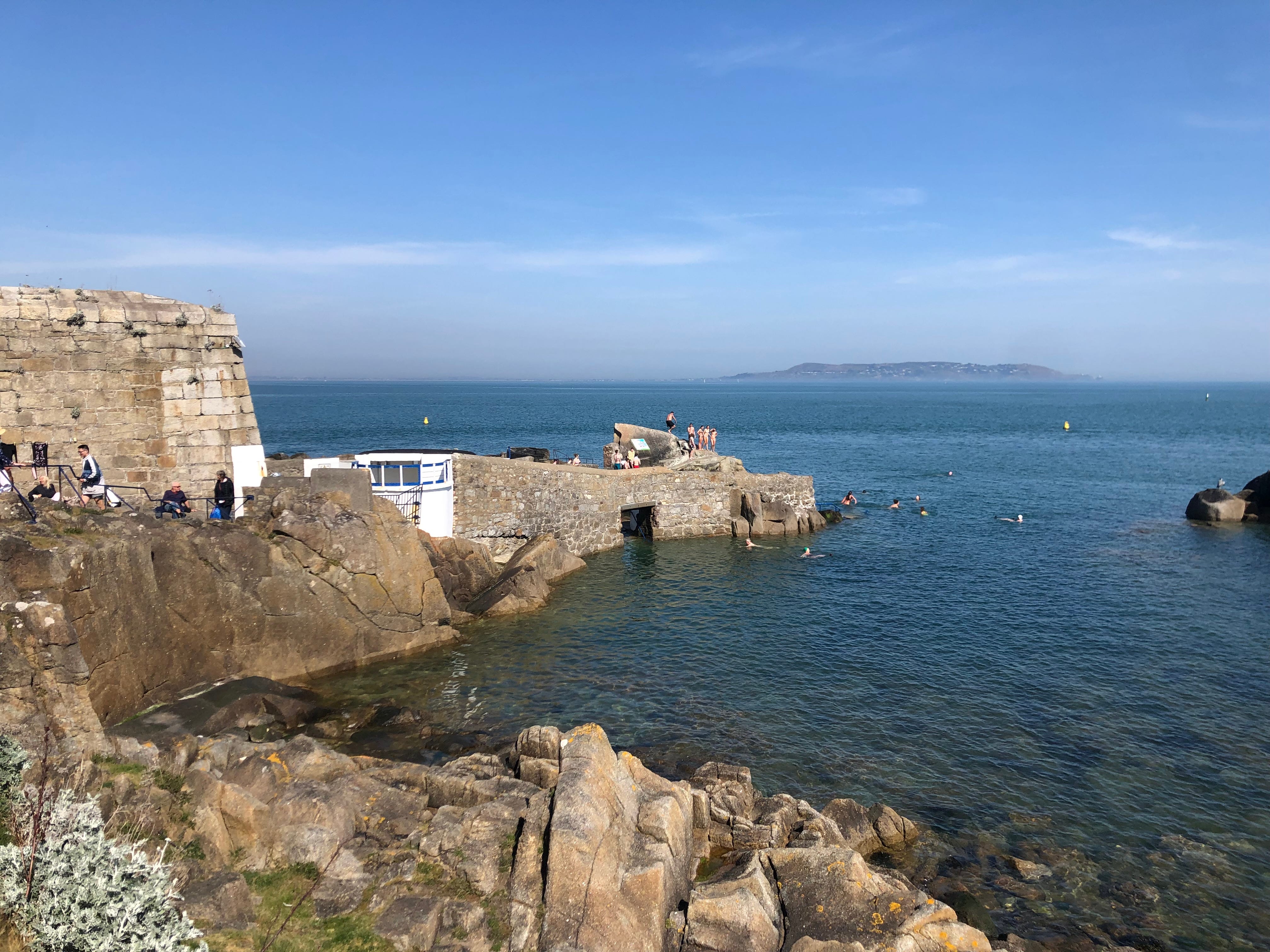
The Forty Foot is a natural cove carved into the rocky coastline. Young people were joyfully hurling themselves from the rocks into the sea below. They were having a riot of a time: the boys posturing at the rocky edge; the girls diving gracefully into the waves. The swimming place was traditionally a male only bathing area, it was heartening to see young women bravely swimming and diving from the rocks into the sea. The swimming place makes an appearance in the opening chapters of Ulysses, where Buck Mulligan takes his early morning dip:
He capered before them down towards the fortyfoot hole, fluttering his winglike hands, leaping nimbly, Mercury’s hat quivering in the fresh wind that bore back to them his brief birdsweet cries.
He capered before them down towards the fortyfoot hole, fluttering his winglike hands, leaping nimbly, Mercury’s hat quivering in the fresh wind that bore back to them his brief birdsweet cries.
James Joyce – Ulysses
We strolled back along the seafront as the tide began to recede. More people were out enjoying the wide green stretch of the strand: walking dogs, chatting, or simply breathing in the sea air. It was refreshing to wander through a seaside town untouched by arcades, loud music, or shops selling tacky souvenirs. Here, there was just the sea, the park, and the occasional sculpture placed along the promenade. We did, however, come across a fish and chip shop and couldn’t resist stopping in for some deliciously crispy battered fish and hand-cut chips.
We walked all the way to Dún Laoghaire harbour. Another small town, Dún Laoghaire is larger and busier than Glasthule. There were fewer artisan shops and cafés, but we managed to get a coffee before heading back to the station for our return trip to Dublin.
 Literary Britain
Leave a comment