I was late. The minibus was already at the stop. I did something I very rarely do and broke into a run. I was the last one there. I was shown into a minibus that, at first glance, appeared to have no spare seats in it. The driver indicated a space at the back that would have suited a small child if they had been prepared to rough it a bit. I shoehorned myself into it, much to the disappointment, so I imagined, of my two neighbours, who had been looking forward to a journey in relative comfort.
I was on my way to see the childhood homes of John Lennon and Paul McCartney, on a tour conducted by the National Trust, who care for them. They have been preserved in the style in which they would have been known in the 1950s, when the two future Beatles were growing up in them. These are the places where they first learned to play instruments, practiced with other musicians and started to work on their early song ideas.
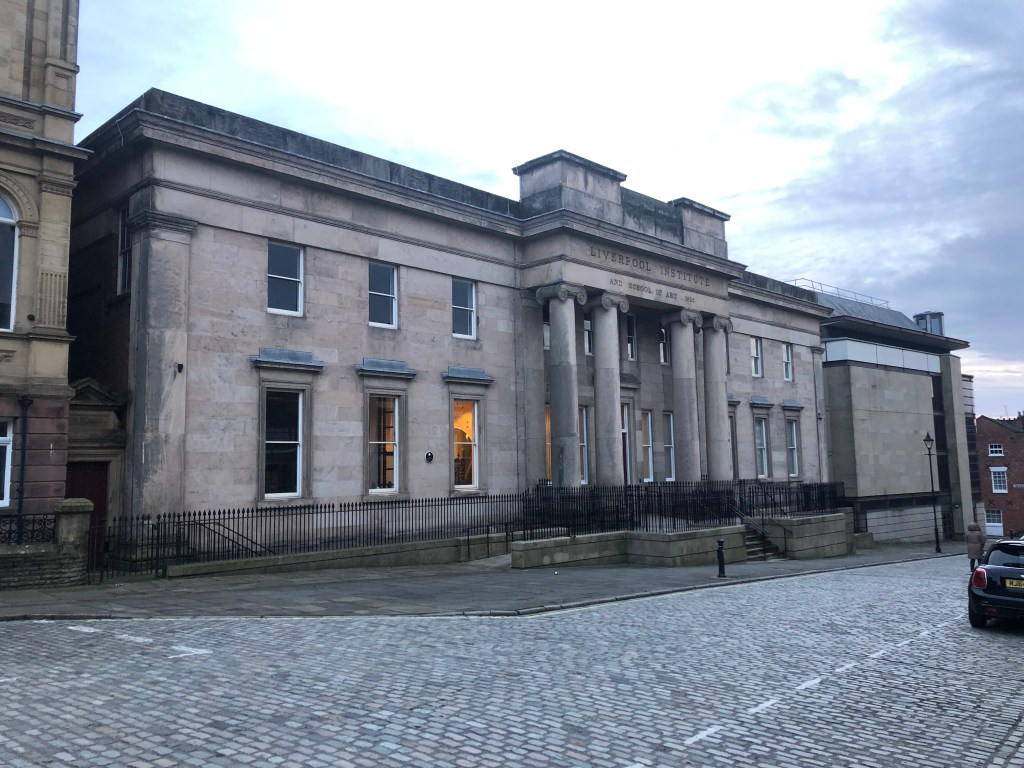
Liverpool, rightly, makes the most of having produced history’s most influential songwriting team. You will find statues, plaques and murals to both of them throughout the city. They are chiefly of John, of course, whose assassination has earned him an almost mythical status. Several university buildings, and even Liverpool’s international airport, are named in his honour. Paul is less widely celebrated but is still active in the life of the city. He founded the Liverpool Institute of Performing Arts, which exists to nurture creativity in young people and is housed in the building where he and George went to school.
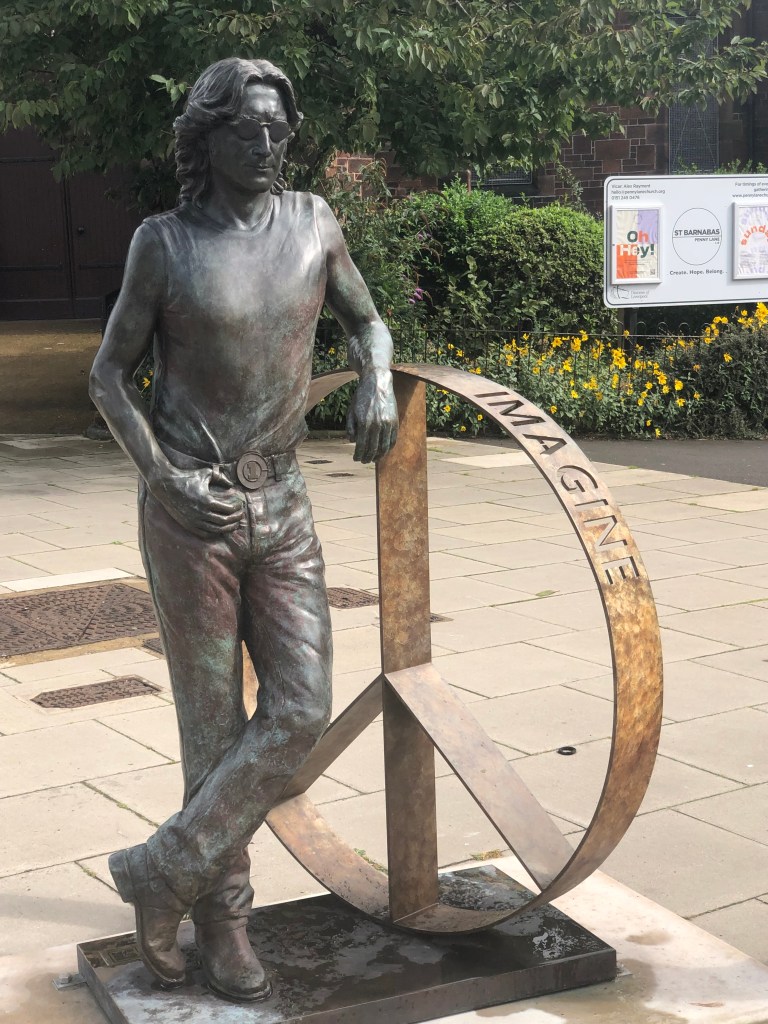
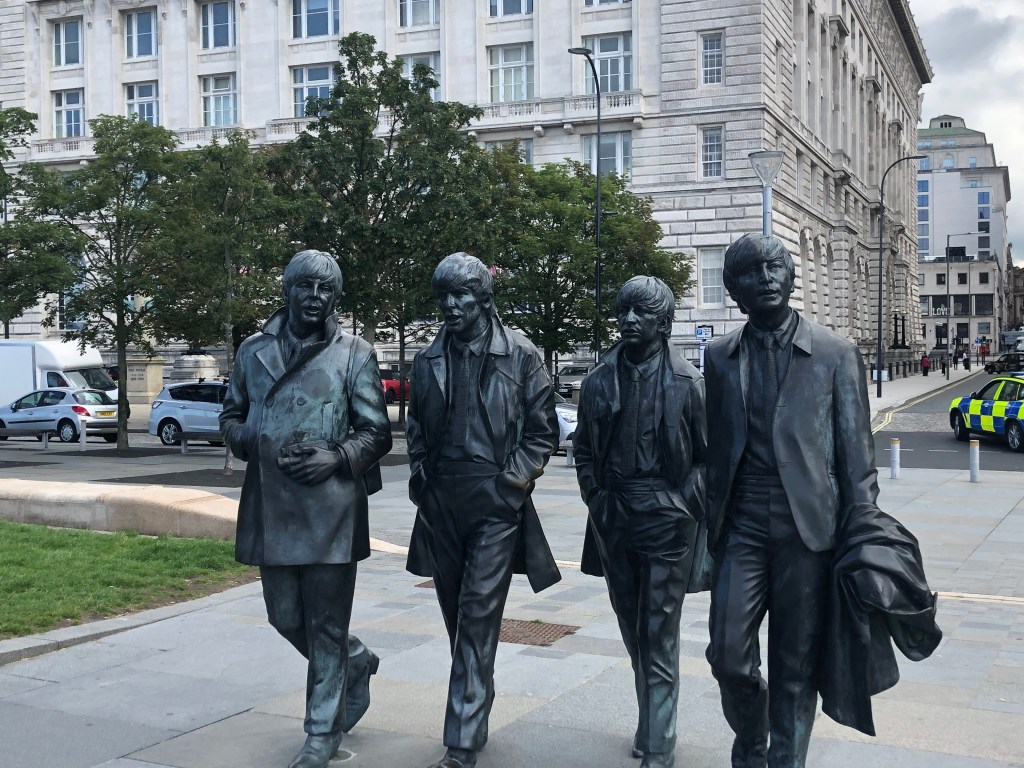
I was on holiday in Liverpool this year and, alongside experiencing what the city had to offer inn the shape of artisan food shops, friendly pubs and a superb art collection, I had visited some of these memorials and sites of special Beatle interest. The statue of John leaning on ‘peace’ sign at Penny Lane is quite a nice memorial, much more so than the fibreglass monstrosity in Mathew Street, near the Cavern Club. The best of them is the Beatles statue on the quayside outside the Liver Building. The four of them striding purposefully towards the ferry terminal. a reminder that all four left Liverpool in 1964 and never lived in the city again.
I tried to overlook the more commercial enterprises, wondering what the, at least four, dedicated Beatles museums could offer. There is an excellent display about them in the Liverpool Museum. This display puts them into context with the huge number of bands that were thriving in Liverpool during the ‘Merseybeat’ explosion of the sixties. You can chart how this cult burgeoned into a wider cultural movement that has kept Liverpool writers and performers at the forefront of the cultural life of the nation.

The only one of these attractions that interested me as having some sort of historical connection to the band was the Cavern Club: a replica of the original club in which the Beatles first found an audience for their unique blend of Rock ‘n’ Roll, sentimentality and cheeky Northern humour. Although this is not the original club that crowds queued for several hours to get into, it does at least try to recapture some of the atmosphere and excitement of these early gigs. There are no queues to get in now, no press of people straining to see the band through a smoke-filled room and no crowds of sweaty teenagers with all their associated smells.
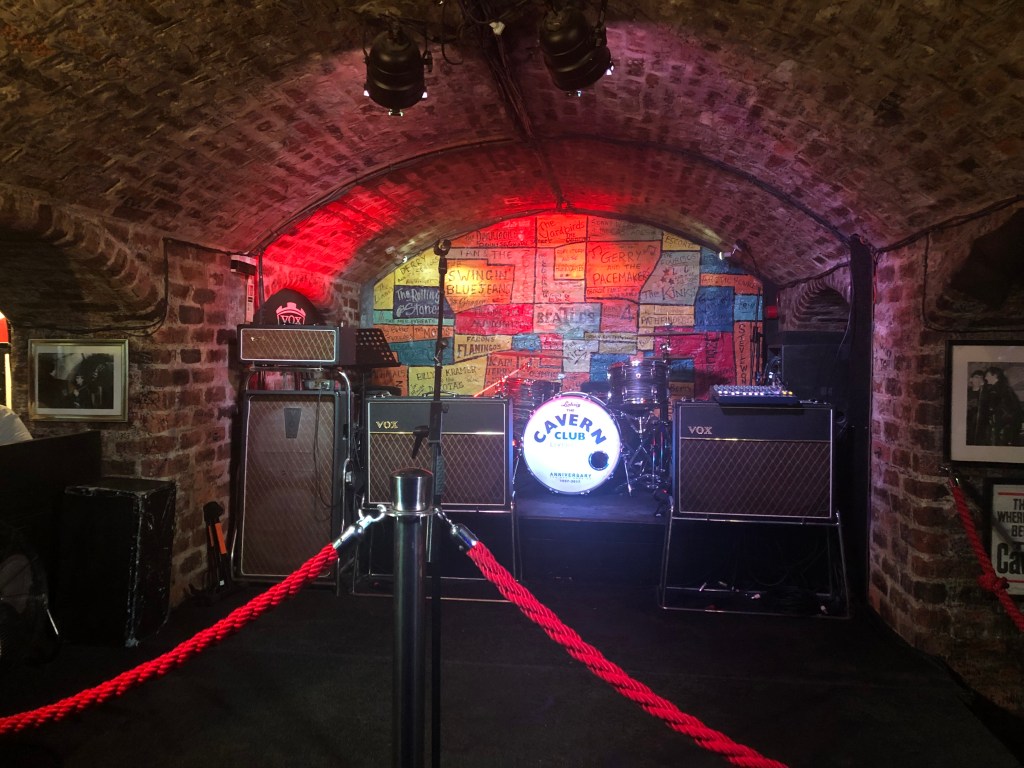
You pay five pounds to get in and descend a photograph lined staircase into the subterranean darkness. Once there, you will find a bar selling reasonably priced drinks a menu of snacks and a display of the souvenirs on offer: reproduction posters from the original club, branded merchandise and so on. There was a performer on stage, playing a guitar and singing old Beatles songs. She was very good but the music was incredibly loud. so loud, in fact, that she kept apologising for it. In the space where once teenagers would have crowded in to see their favourite bands, families sat at tables and watched the act appreciatively. Old folk looked on reminiscently, while their grandchildren danced to the music untiringly and enthusiastically. Today’s teenagers sat gloomily trying to pretend they weren’t enjoying the music.
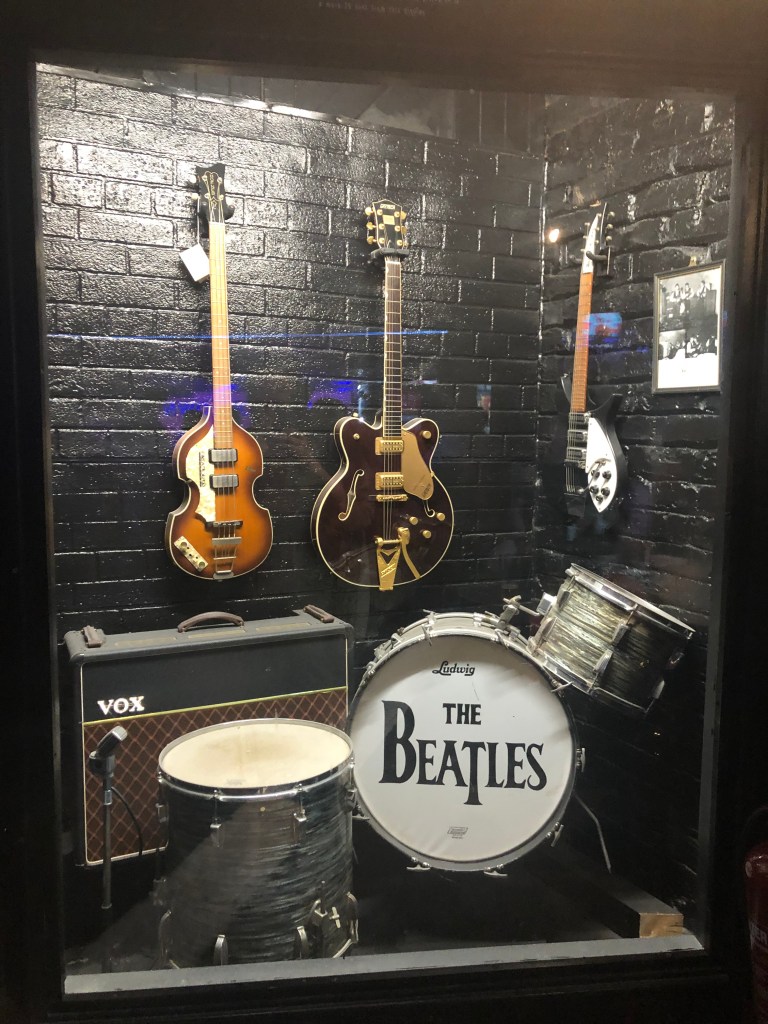
I loved the Cavern: the music was good, the displays interesting and the toilets were clean. I had a drink and listened to the music for a while, immersing myself in the nostalgia of the place and its blatant, unashamed celebration of all things musical. The singer finished her set and I wandered around to look at the displays. There are exhibits featuring many of the acts to play the cavern, including Queen, The Rolling Stones, the Who and some more recent acts. In one case, in some respects the highlight of my visit, is displayed them four most iconic musical instruments in the world.
Now I was being driven away from Parkway station in the company of fifteen happy tourists towards a middle-class suburban semi in Woolton. The house, ‘The Mendips’, the guide told us, didn’t need much restoration when it was gifted to the nation in 2002. The previous owner had bought it from John Lennon’s aunt Mimi and had done little work on it other than a bit of repainting. Yoko Ono bought the house and gave it to the nation to prevent it being exploited for financial reasons. It was placed into the care of the National Trust who set about furnishing it in an appropriate late fifties fashion that John would have known as a child.
On entering the house, I recognised some of the sights and smells from my own childhood. It reminded me of my aunt’s house (she had similar kitchen cupboards). There was, however, a melancholic air about the house; unsurprising when you consider the tragic events that took place there: first John being abandoned by his parents, the sudden death of Uncle George, and then of Julia Lennon, John’s mother.
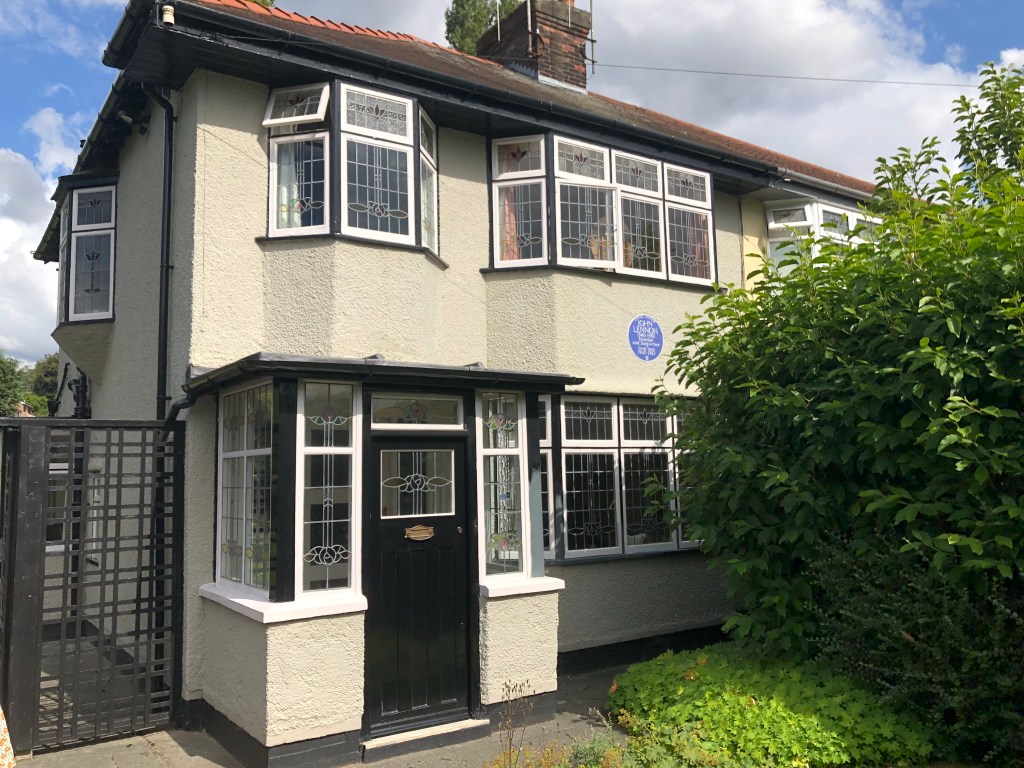
There were happy stories too, and the guide was able to tell us about John’s childhood and his aunt Mimi’s growing inability to control his free spirit. He would climb the large elm tree in his garden and leap over the fence into the children’s home next door, where he and his friends would play for hours in the grounds. His aunt, a very proper and respectable woman, would tell him “You’ll be hung if you keep trespassing in Strawberry Fields” I enjoyed seeing the old photographs and the drawings John did at school. His first guitar hung on his bedroom wall. The Trust had also placed a favourite book in his room and I thought the inclusion of Alice in Wonderland an appropriate choice for John.
The bus took us next to Paul McCartney’s house. a much more modest, smaller place. This time, the restoration took a little more work, with the trust having to recreate the furnishings as Paul would have known them. This is the real shrine for Beatles fans as it was in the front room that Paul, John and George first got together to practice and write songs, later inviting one of John’s friends, Stuart Sutcliffe, to join them. Stuart’s sudden death in 1962 further adding to Lennon’s roll of tragedy.
Like The Mendips, this house had its share of tragic events. The death of Paul’s mother from breast cancer being one of the things that bound him to John. Also, like the Mendips, it was a happy home. Paul and his brother, Mike, were clearly very close as children and their father supportive of their creative efforts, having been a musician himself and, therefore, more tolerant of the horrible noises that nascent musicians tend to make. The house had a less restrictive atmosphere than The Mendips, which is probably why the chose to rehearse here.
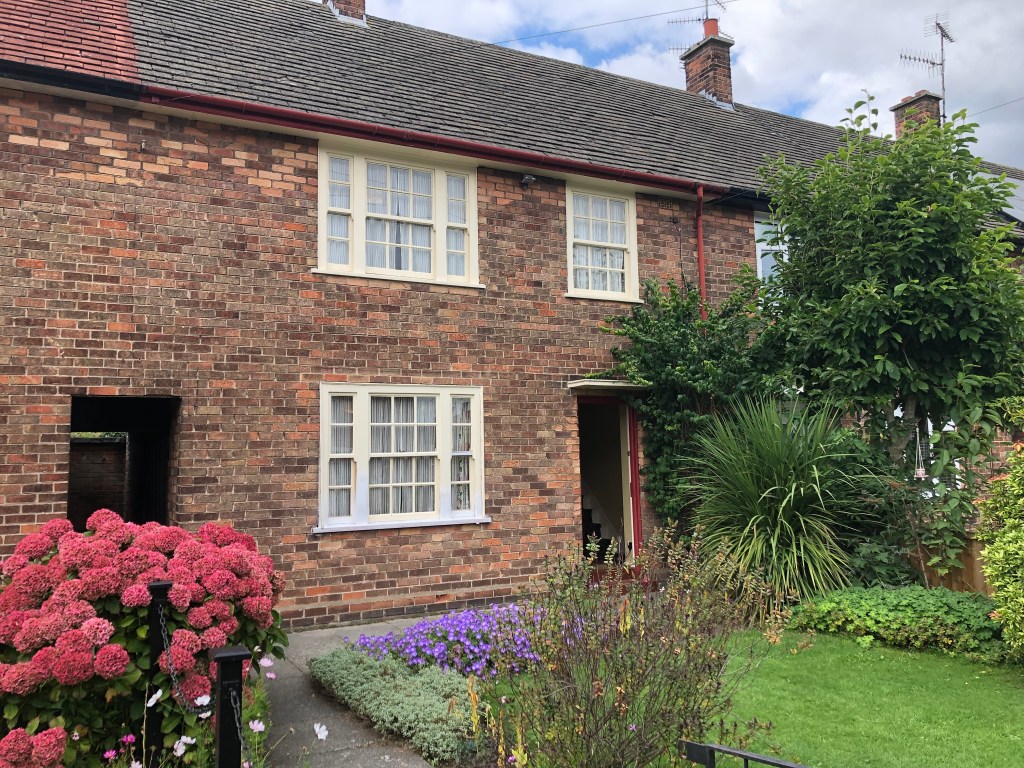
The guide put on a tape of an early Beatles rehearsal, recorded in the very room in which we were standing. It felt remarkable to be standing in the very place that the beginnings of a musical revolution began to develop. Seriously, I had shivers. The photographs on the walls, showing John and Paul rehearsing and writing together, were clearly taken (by Mike) in the very house in which we were standing. I was also happy to discover, on exploring Paul’s bedroom, that the Trust had left a copy of Under Milk Wood on his bed.
I cannot think of any other musicians who would be given the same status as Lennon and McCartney. in America, Elvis Presley and Dolly Parton have a similar status but none in Britain. In fact, their reputation gives them the same status as some of our foremost literary figures and one can’t help but wonder if they will continue to have this stature in 400 year’s time.
…and why shouldn’t they? the contribution they have made to cultural life is simply unfathomable; they have left a legacy of songs beloved by millions.
 Literary Britain
Leave a comment