
In the little town of Hucknall, nestling in the forest of East Nottinghamshire, is the Church of St. Mary Magdalene. A pleasant church, quite grand, indicating Hucknall’s prosperous past as a local trading centre. It nestles among the trees standing imperiously above the market place.
There is much of interest in the church, but all is dwarfed by the tomb of the Byron family, which lies beneath the chancel. Byron died in Greece, in Messalonghi during the country’s fight for independence from Turkey. Byron, like all great romantic heroes, died for the cause of independence and freedom. The great poet was preparing to lead an army to attack the Turkish stronghold when he fell ill. His illness exacerbated over the next few months, developed into a violent fever from which he died. He is still a hero in Greece, however, and his dedication to their cause is the reason that many Greek boys are still given his name.
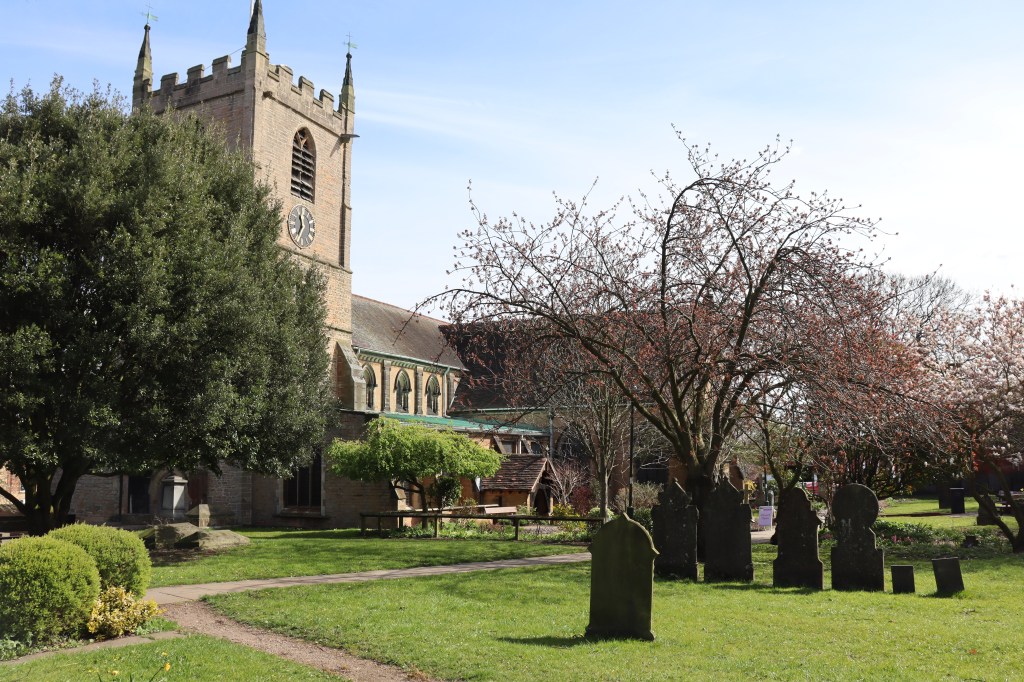
His body was brought back to his beloved Nottinghamshire, where he had lived for most of his life, although, he had left England eight years previously. Inside the church is Byron’s resting place. His tomb is visible through a glass viewing panel, alongside a model of his funeral wreath. He is buried alongside his mother, his only legitimate daughter, Ada, later lady Lovelace, who provided the coding for Babbage’s ‘Difference Engine’, thereby becoming the first ever computer programmer, and his grandfather, the wicked lord, who spent his time recreating naval battles on the lake at Newstead and training racing crickets. Mrs. P had been off to explore the town, and reported little Byron memorials throughout: The Byron’s Rest pub, Byron carpets, Byron plumbers…
We drove on to Newstead Abbey. A palatial house with the ruins of the once thriving medieval abbey attached. The staff here were immensely friendly. I’ve noticed that Nottinghamshire people tend to be friendly and chatty. In fact, most conversations end with me backing slowly away smiling as they continue to talk. Waiting for a lull in the conversation is pointless. The chap I spoke to in the main hall told me story after story about the abbey, it’s owners and it’s visitors. I spent a long time talking to him: it was a very pleasant conversation but I did notice a Donkey having distinct difficultly walking afterwards.
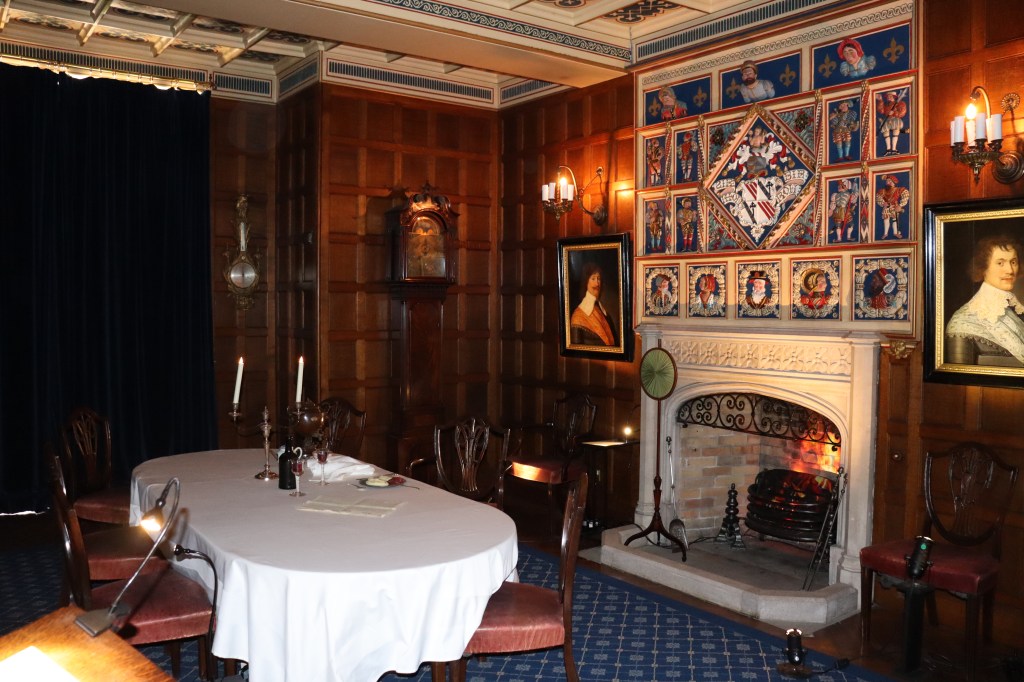
The collection here is amazing: Byron’s books, letters and belongings abound. His private rooms still furnished as they were when he occupied them. I particularly enjoyed seeing his bedchamber and dressing room, in which the ghost of a monk is supposed to have visited him on the night before his wedding (unlikely, as he was married in Sunderland) A portent of misfortune and he did indeed have a disastrous marriage.
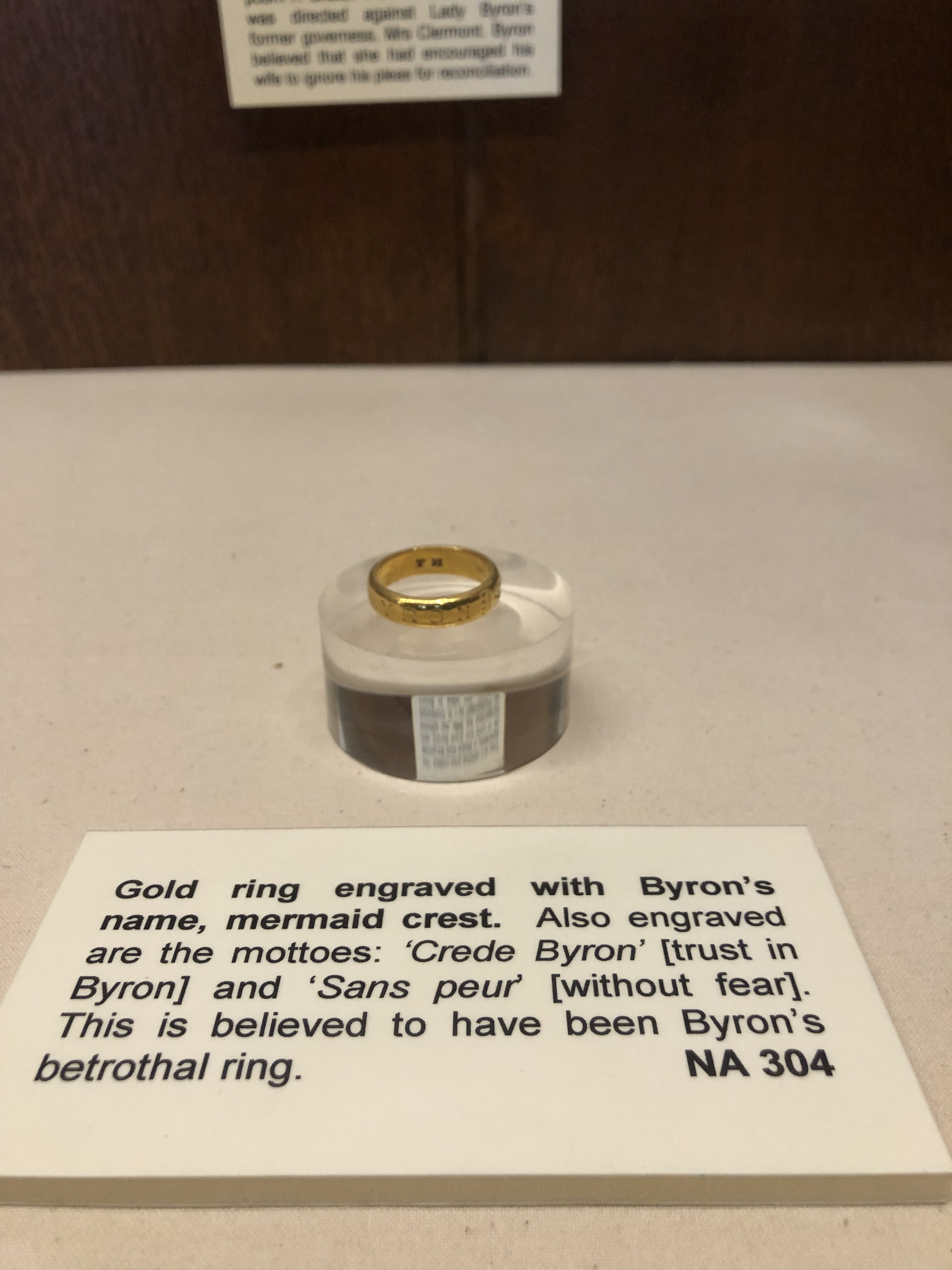
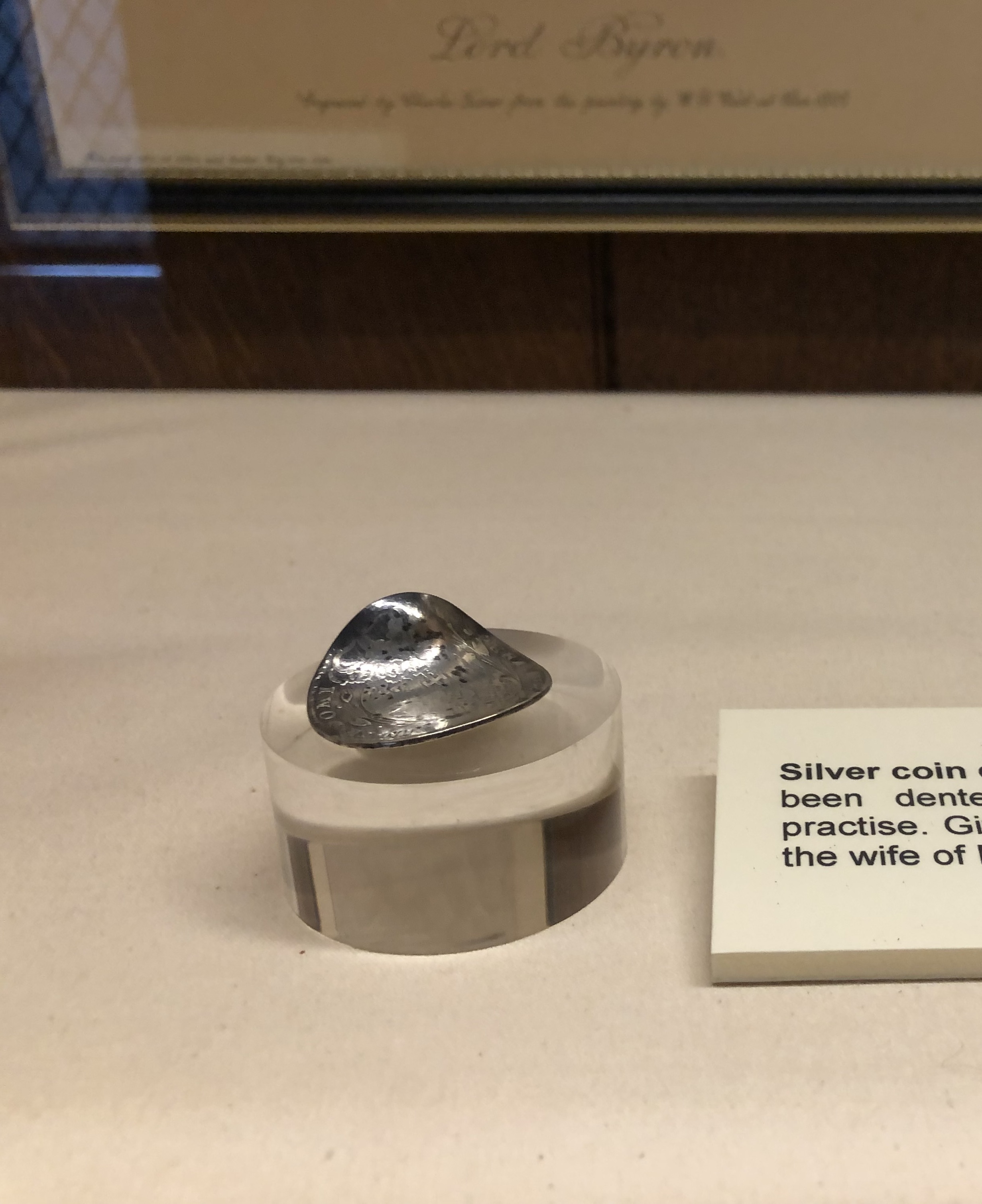
When Byron took possession of Newstead in 1808, it was a ruin and unift for human habition. He lived in a corner of the building: a dining room and, upstairs, the bedroom and dressing room. Among the articles of Byron memorabilia on display, are his wedding ring and a coin, dented during pistol practice. There are also portraits of his favourite dogs, including his beloved Boatswain.
I also saw Boatswain’s tomb in the grounds. A large, elaborate mausoleum to a dear departed friend. It’s heartening to see such devotion from a notoriously irascible man. So devoted was he to Boatswain, that he took him with him to Cambridge, when he went up to University. When he was told that dogs were not permitted, Byron complied with the rule by returning with a tame bear.
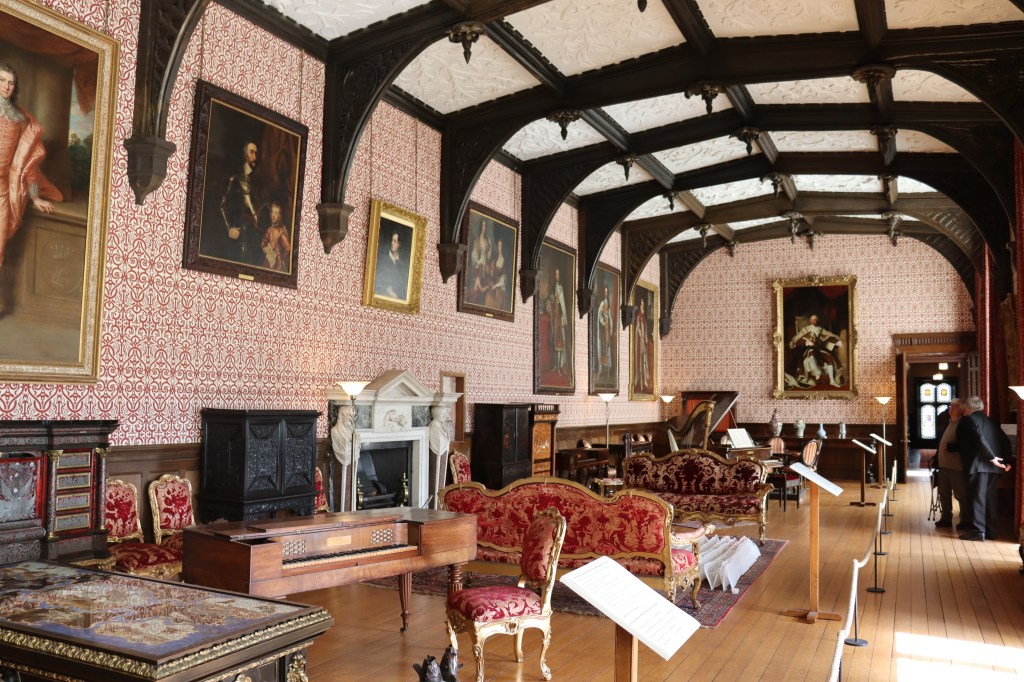
The tour goes on and on. I started to become disoriented as I walked through room after room stuffed with objects and displays about Byron. There is the uniform Byron designed himself for his Greek military campaign, the chalice made from a human skull that he passed around at parties and everywhere there are portraits: books and guns and portraits.
There are also tales about other occupants of the house, including Thomas Wildman, who had Franz Liszt as a guest – you can still see the piano on which he played – but it is Byron whose presence still pervades the hall.
I explored the grounds next, where I found Mrs. P by the lake. Newstead is at it’s best from the grounds: part stately home and part gothic film-set, it is the perfect setting for the legend that we have created around Byron, although, in 1814 when Byron left England, Childe Harold’s pilgrimage had just been published and his fame was only just beginning to grow. There was only one thing left for us to do now, so we found a tea shop and settled down to afternoon tea.
It was still early afternoon as we left Newstead, so we drove on to Southwell. Byron’s mother lived here when her son was up at Cambridge, so he visited her here as a young man. While here, he struck up a friendship with a nearby family, whose children, Elizabeth and John, were of a similar age. They put on plays together to entertain the local community. Elizabeth even encouraged young George to pursue his interest in poetry. They became close and their families started to expect the couple to become engaged. This was Byron, however, and marriage wasn’t something he had contemplated. They eventually fell out in circumstances that were considered scandalous, Elizabeth’s brother even challenged Byron to a duel. You can see the houses of both parties: Burgage House and Burgage Manor, in Southwell.

The town is dominated Magnificent minster. A stately building unusual pyramidal spires. I spent an hour looking around here. there was a display of carving, intricate leaves detailed.: some of the carving is famous for it’s intricacy and detail. There is also a library here which they occasionally open to visitors, though, sadly, it was not open today.
We rounded off the day with a pint in the Saracen’s Head. The beer was good and the place very quiet for a market town inn in late afternoon. Dickens stayed here during one of his sojourns and Byron wrote an epitaph for one of the pubs customers, who died of drunkenness. The poem, written when Byron was 17, shows some of his nascent genius and skill at wordplay:
EPITAPH ON JOHN ADAMS, OF SOUTHWELL,
A CARRIER, WHO DIED OF DRUNKENNESS.
John Adams lies here, of the parish of Southwell,
Lord Byron, 1807
A Carrier who carried his can to his mouth well;
He carried so much and he carried so fast,
He could carry no more—so was carried at last;
For the liquor he drank being too much for one,
He could not carry off;—so he’s now carri-on.
 Literary Britain
Leave a comment